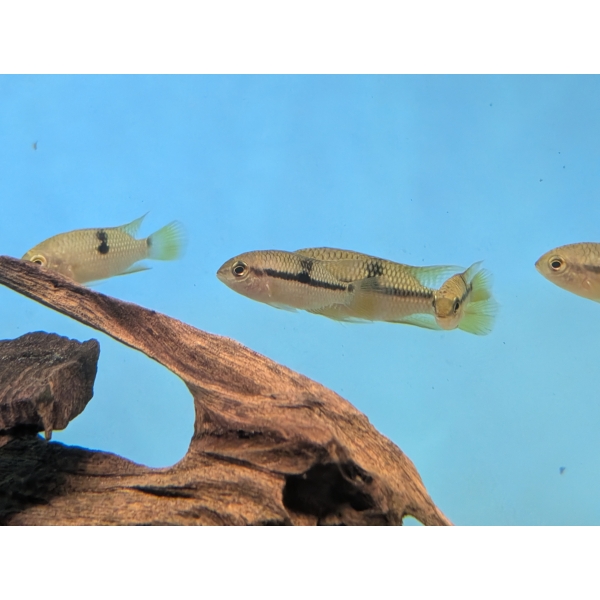
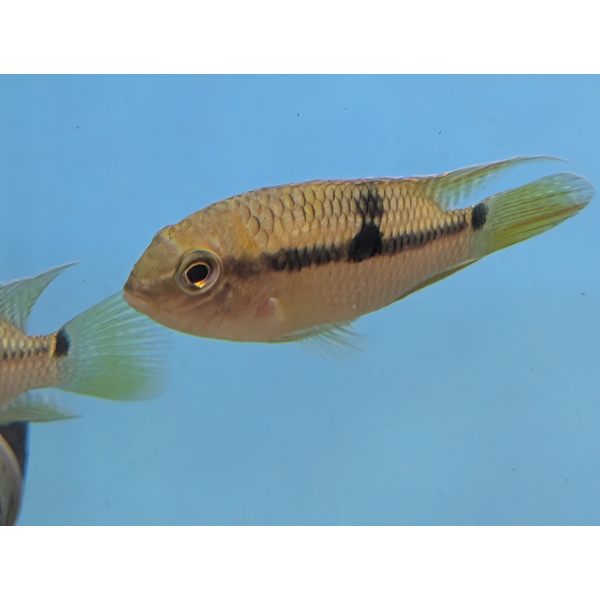
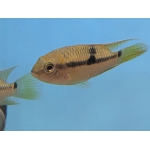


Super Orange Aequidens F1
£15.00
Super Orange Aequidens F1
Bulk Offer – 3 for £42.00
Discount will apply at checkout.
- Description
- Store Policies
- Enquiries
Description
The Super Orange Aequidens:
A Complete Profile
Scientific Name: Aequidens superomaculatum (commonly confused in the trade with high-colour morphs of Aequidens tetramerus or Aequidens diadema)
Common Names: Super Orange Acara, Super Orange Saddle Cichlid
Family: Cichlidae
Origin: South America (specifically the Orinoco and Rio Negro basins, Venezuela/Colombia)
1. Introduction and Classification
The “Super Orange Aequidens” is a relatively recent entrant to the British aquatics scene. While the trade name is sometimes loosely applied to xanthic (yellow/orange) variants of the widespread Aequidens tetramerus (Saddle Cichlid), the true “Super Orange” is widely considered to be ** Aequidens superomaculatum **, a species scientifically described only as recently as 2015.
Its specific epithet, superomaculatum, translates roughly to “spot above,” referring to the distinct positioning of its lateral blotch, which sits higher on the flank than in similar species. This fish is prized for its manageable size, generally placid temperament (for a cichlid), and the intense burnt-orange to golden hues that mature adults develop.
2. Physical Characteristics
The Super Orange is a robust, deep-bodied cichlid that exudes power without the sheer bulk of the larger “Tankbusters”.
-
Colouration: Juveniles may appear somewhat drab, displaying silver or grey tones. However, as they mature—and particularly during breeding—they develop a vivid orange wash across the flanks, gill covers (operculum), and fin edges.
-
Markings: The defining feature is the lateral blotch situated high on the side, near the dorsal fin, rather than purely along the lateral line. A dark vertical band often runs through the eye (the “cheek stripe”).
-
Size: Males typically reach 15–18 cm (6–7 inches), while females remain slightly smaller, usually topping out at 12–14 cm.
-
Dimorphism: Males develop longer, more pointed dorsal and anal fins and generally display more intense orange colouration. Mature males may also develop a slight nuchal hump (a fatty lump on the forehead), though this is less pronounced than in species like the Green Terror.
3. Natural Habitat
In the wild, Aequidens superomaculatum inhabits the blackwater and clearwater tributaries of the Rio Casiquiare and Rio Inirida in Venezuela and Colombia.
-
Water Conditions: These waters are typically stained with tannins from decaying vegetation, resulting in soft, acidic water.
-
Flow: They prefer slow-moving currents (lentic environments) where leaf litter and submerged wood provide ample cover.
4. Aquarium Requirements
To ensure the health and colour vitality of this species in a British home aquarium, one must replicate their natural Amazonian environment.
Tank Size
-
Minimum Volume: A standard 120-litre (30 gallon) aquarium is the absolute minimum for a single specimen or a compatible pair.
-
Ideal Volume: For a community setup or to allow full natural behaviour, a tank of 200 litres (approx. 4ft length) is recommended.
Water Parameters
While captive-bred specimens are adaptable, wild-caught individuals require stricter adherence to soft water parameters.
-
Temperature: 24°C – 28°C
-
pH: 5.5 – 7.0 (Aim for slightly acidic to neutral).
-
Hardness: Soft to moderate (2 – 12 dGH).
Decor and Substrate
-
Substrate: Fine silica sand is ideal. These fish are geophagus (earth-eaters) to a minor extent and will sift through the substrate for food. Coarse gravel can damage their gills.
-
Hardscape: Use plentiful bogwood and twisted roots to create territories. The tannins released by the wood will naturally acidify the water and enhance the fish’s orange pigment.
-
Plants: Unlike many larger cichlids, the Super Orange is relatively plant-safe. However, they may uproot delicate stems while digging. Robust plants like Anubias, Java Fern (Microsorum), and Amazon Swords (Echinodorus) are excellent choices.
5. Diet and Feeding
The Super Orange Aequidens is an omnivore with a preference for small invertebrates.
-
Staple Diet: High-quality cichlid pellets (sinking variety preferred).
-
Live/Frozen Foods: To maximise the “Super Orange” colouration, feed regular portions of bloodworm, brine shrimp (Artemia), and krill. These foods are rich in carotenoids which enhance red and orange pigments.
-
Vegetable Matter: Occasional offerings of blanched spinach or peas will aid digestion and prevent bloat.
6. Behaviour and Tank Mates
This species is described as “semi-aggressive,” which in cichlid terms means it is generally peaceful but will defend its territory, especially when breeding.
Temperament
They are generally indifferent to fish that do not look like them or encroach on their bottom-dwelling territory. They are far less aggressive than the superficially similar “Green Terror” (Andinoacara rivulatus).
Suitable Tank Mates
-
Shoaling Fish: Deep-bodied tetras that are too large to be eaten, such as Bleeding Heart Tetras, Congo Tetras, or Emperor Tetras.
-
Catfish: Armoured catfish like Corydoras (in larger groups) and Loricariids (Plecos) such as the Bristlenose or Blue Phantom.
-
Other Cichlids: Peaceful South American cichlids like Severums (Heros sp.), Keyhole Cichlids, or Festivums.
Avoid: Very small fish (Neon Tetras, Guppies) which will be viewed as live food, or hyper-aggressive Central American cichlids.
7. Breeding
Breeding the Super Orange Aequidens is a rewarding project for the intermediate hobbyist. They are substrate spawners with biparental care.
-
Pair Formation: It is best to purchase a group of 5–6 juveniles and allow them to pair off naturally.
-
The Spawning Site: The pair will select and meticulously clean a flat surface—usually a smooth stone or a broad leaf.
-
The Act: The female lays between 200–400 eggs, which the male fertilises.
-
Parental Care: Both parents guard the eggs aggressively. The eggs hatch in 2–3 days, and the fry become free-swimming 3–4 days later.
-
Fry Care: Fry can be fed on microworms or newly hatched brine shrimp.
8. Summary Table
| Parameter | Recommendation |
| Tank Size (Min) | 120 Litres |
| Temperature | 24–28°C |
| pH | 6.0–7.0 |
| Diet | Omnivore (Protein heavy) |
| Temperament | Semi-Aggressive / Territorial |
| Lifespan | 8–10 Years |
Convenient nationwide delivery; you’re only a click away!
Please put your desired delivery day in the Order Notes on the Checkout page.
General Enquiries
There are no enquiries yet.