
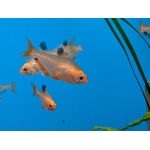
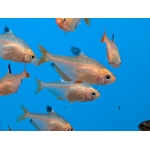
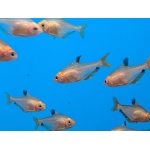
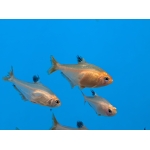


Serpae Tetra (Megalamphodus eques)
£3.50
Bulk Offer – 6 for £18.00
Discount will apply at checkout.
- Description
- Store Policies
- Enquiries
Description
Serpae Tetra (Megalamphodus eques):
A Comprehensive Care Guide
The Serpae Tetra is a captivating and popular freshwater fish in the aquarium hobby. Known for its deep, crimson-red body and vibrant personality, it brings a lively splash of colour to a community tank. While the scientific name Megalamphodus eques is sometimes used, this species is more commonly and currently classified as Hyphessobrycon eques. The information in this guide applies to both classifications as they refer to the same species. With the right setup, the Serpae Tetra can be a fantastic and rewarding addition to your aquarium.
Taxonomy and Classification
- Kingdom: Animalia
- Phylum: Chordata
- Class: Actinopterygii
- Order: Characiformes
- Family: Characidae
- Genus: Megalamphodus (now more commonly classified as Hyphessobrycon)
- Species: eques
The species Megalamphodus eques is a classic member of the Characidae family. It is also known as the Jewel Tetra and is a popular choice for aquarists.
Habitat and Distribution
The Serpae Tetra is native to the Amazon Basin in South America. Its natural habitat consists of slow-moving streams, ponds, and lakes, where it is typically found in areas with dense vegetation and darker, tannin-stained water. These environments are often characterised by soft, acidic water conditions.
Physical Characteristics
The Serpae Tetra typically grows to a maximum size of 4-5 cm (around 2 inches). Its most notable features include:
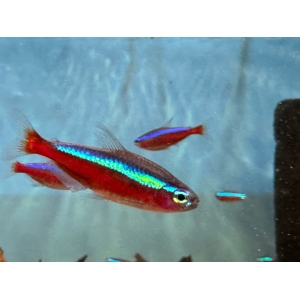
- Colouration: A beautiful, vibrant crimson or rusty red body colouration.
- Distinctive Spot: A prominent black, comma-shaped spot is located just behind the gills.
- Fins: The dorsal fin is typically black with a white tip, while the other fins have a reddish-orange hue.
- Body Shape: A deep, laterally compressed body, giving it a somewhat stout appearance.
A common variant is the Long-Finned Serpae Tetra, which has been selectively bred to have more elaborate finnage.
Diet and Feeding
Serpae Tetras are omnivorous. In the wild, they would feed on small insects, worms, and plant matter. In the aquarium, they are not fussy eaters and will readily accept a variety of foods.
Suitable foods include:
- Flake & Pellets: High-quality flake or small pellets formulated for tropical fish should form the staple of their diet.
- Frozen & Live Foods: Supplement their diet with protein-rich foods like frozen or live brine shrimp, daphnia, and bloodworms to enhance their colouration and vitality.
- Vegetable Matter: They may also graze on algae and soft plant matter, so a balanced diet is important.
Behaviour and Temperament
This is a key consideration when keeping Serpae Tetras. They are a semi-aggressive and nippy species, especially if they are not kept in a large enough group. They will establish a pecking order within their school, and this behaviour can sometimes spill over to other fish.
To manage their temperament:
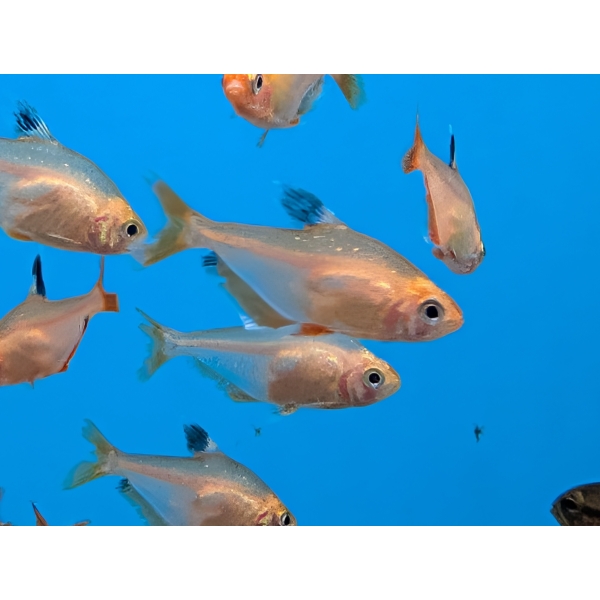
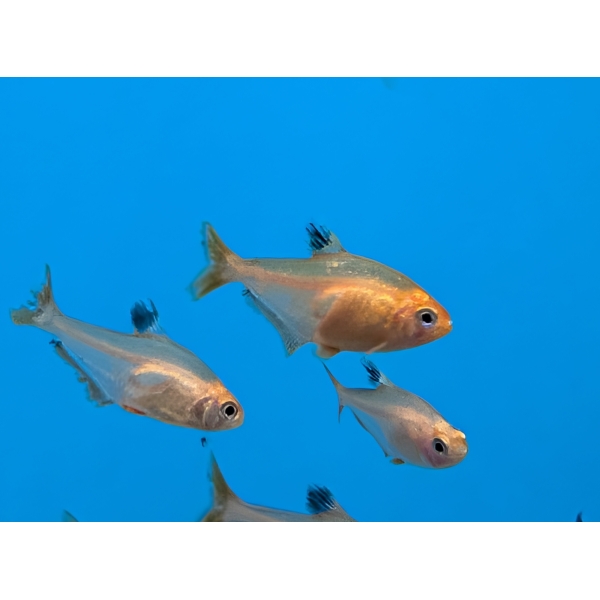
- Keep them in a school of at least six to ten individuals. This allows them to focus their aggression on each other, preventing them from harassing other tank mates.
- They are active swimmers that spend most of their time in the middle of the water column.
Reproduction
Serpae Tetras are egg-scatterers. Breeding them in a home aquarium can be challenging but is achievable. They do not exhibit parental care and will eat their own eggs. A dedicated breeding tank with soft, acidic water and a spawning mop or fine-leaved plants is required to protect the eggs.
Aquarium Care
Providing the right environment is crucial for the health and happiness of your Serpae Tetras.
- Tank Size: A minimum of 80 litres (20 gallons) is recommended for a small school. A larger tank is better to diffuse their semi-aggressive behaviour and provide ample swimming space.
- Water Parameters:
- Temperature: 24–28°C (75–82°F)
- pH: 5.0–7.5 (They prefer slightly acidic to neutral water)
- Hardness: 5-15 dGH (Soft to moderately hard water)
- Filtration: A reliable filter with a moderate flow is suitable. They need clean, well-oxygenated water.
- Decor: A well-planted tank with a darker substrate will make their colours stand out and provide plenty of hiding spots and visual breaks. Driftwood and leaf litter can help to create a natural, tannin-stained “blackwater” effect, which they enjoy.
- Tank Mates: Choose tank mates carefully. Suitable companions include other fast-moving, robust fish that can hold their own, such as other Tetras (e.g., Black Skirt Tetras, Congo Tetras), Barbs, Corydoras, and some species of Plecos. Avoid slow-moving, long-finned fish like Angelfish, Bettas, and Gouramis, as the Serpae Tetras are likely to nip their fins.
- Maintenance: A 25% weekly water change is essential to maintain good water quality and keep nitrate levels low.
With a properly sized tank and compatible tank mates, the Serpae Tetra will thrive and become a beautiful and dynamic focal point in your aquarium.
Convenient nationwide delivery; you’re only a click away!
General Enquiries
There are no enquiries yet.