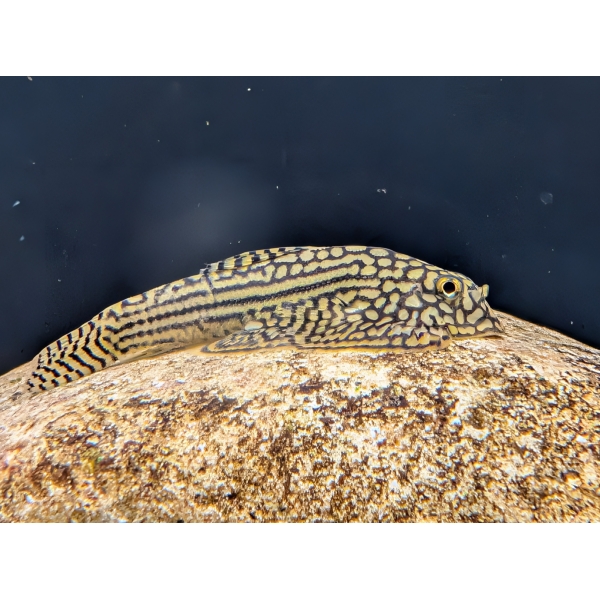
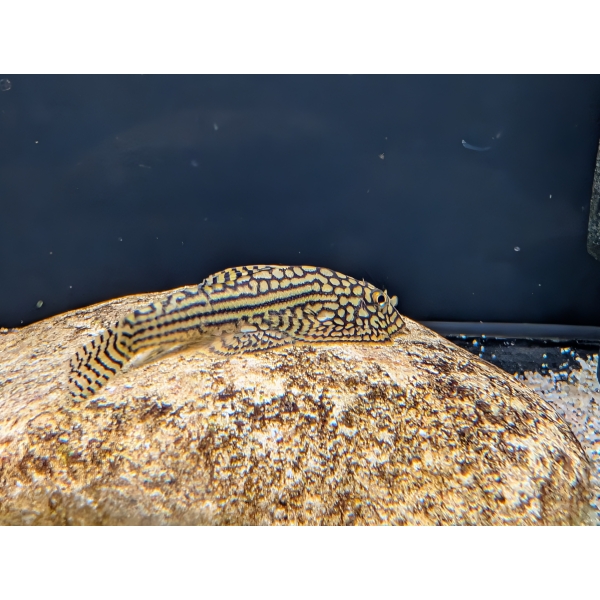
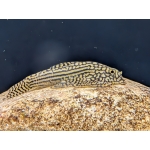
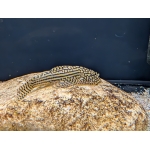
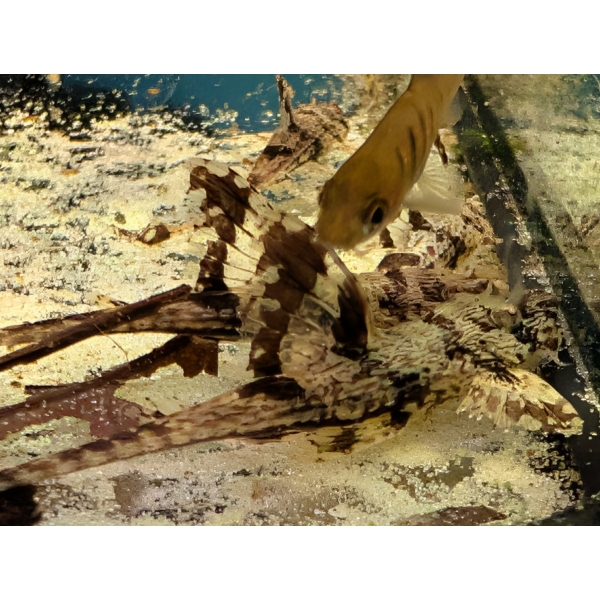
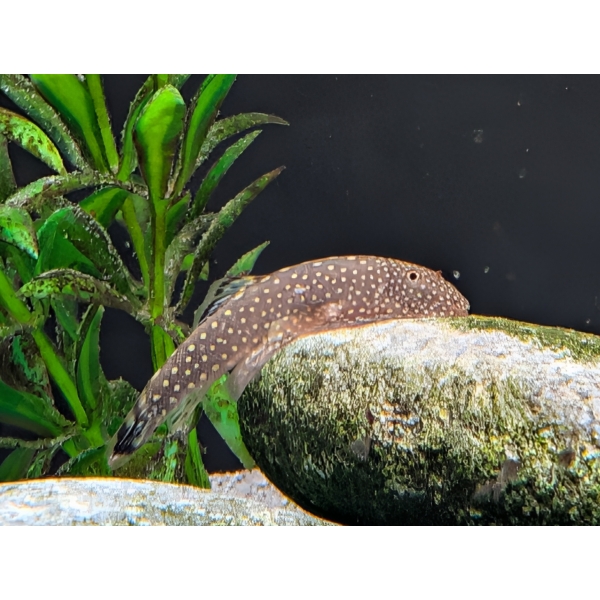
Tiger Hillstream Loach
£12.00
Tiger Hillstream Loach
Bulk Offer – 3 for £33.00
Discount will apply at checkout.
- Description
- Store Policies
- Enquiries
Description
Tiger Hillstream Loach (Sewellia lineolata)
Care Guide
The Tiger Hillstream Loach, also known as the Reticulated Hillstream Loach or the Borneo Sucker, is a stunning and uniquely adapted fish. Their flat, ray-like body is designed to allow them to cling to smooth rocks in fast-flowing mountain streams, giving them the appearance of miniature freshwater stingrays.
Natural Habitat and Adaptations
- Origin: Vietnam, Laos, and Borneo.
- Environment: They inhabit high-altitude, clear-water streams and rivers. These waters are characterised by intense flow, high levels of dissolved oxygen, and cooler temperatures.
- Adaptation: Their paired fins form a large suction disc, enabling them to resist strong currents and graze on biofilm (a thin layer of algae and microorganisms) growing on submerged rocks and pebbles.
Aquarium Requirements (The Hillstream Setup)
Recreating their fast-moving habitat is the single most important factor for success with this species.
Tank Volume and Structure
- Minimum Tank Size: litres ( Imperial Gallons) for a small group. A wider, shorter tank is preferable to a tall one, as it maximises the surface area for oxygen exchange and provides more floor space for grazing.
- Substrate: Use fine sand or smooth, rounded pebbles. Avoid sharp gravel that could injure their delicate undersides.
- Aquascape: This must include numerous smooth river stones, flat slate, and bogwood. These surfaces are essential for the loaches to cling to and feed from. Arrange them to create caves and crevices, providing shelter from the flow and from light.
Water Flow and Filtration
- Flow: This must be high. Use a powerful external canister filter or supplemental powerheads aimed across the bottom of the tank to generate a strong, continuous current.
- Oxygenation: Extreme oxygen saturation is mandatory. Ensure the filter outlet or powerhead heavily agitates the water surface (creating ripples and bubbles) to maximise the dissolved oxygen content.
Water Parameters
Hillstream Loaches are sensitive to poor water quality and fluctuating temperatures.
- Temperature: to . They prefer cooler water and may become stressed or sick if temperatures rise consistently above .
- : Neutral to slightly alkaline, to .
- Hardness (): to .
- Water Quality: Ammonia and Nitrite levels must be zero. Nitrate should be kept very low, ideally below , via frequent, large water changes.
Note on Water Changes: Due to their requirement for pristine water, we recommend performing to water changes twice weekly, using a high-quality water conditioner.
Diet and Feeding
While often touted as an “algae eater,” the Tiger Hillstream Loach primarily grazes on biofilm and diatoms (soft, brownish algae). They are not effective at controlling tougher hair or brush algae.
- Primary Diet: Biofilm naturally growing on rocks. Encourage this by placing smooth stones near the light for several days before adding them to the tank.
- Supplemental Foods:
- High-quality algae wafers or sinking pellets that contain spirulina or vegetable matter.
- Fresh vegetables (e.g., blanched courgette, spinach, cucumber) attached to a rock.
- Frozen foods (small portions of bloodworm, daphnia, or brine shrimp) offered occasionally as a treat.
Temperament and Compatibility
- Social Structure: Hillstream Loaches are social fish and should be kept in groups of three or more.
- Temperament: They are generally peaceful but can be territorial towards their own species, often engaging in harmless, short-lived scuffles where they chase or push each other for dominance over a favoured rock. This is normal behaviour.
- Tank Mates: Choose peaceful fish that tolerate strong current and cooler temperatures, such as White Cloud Mountain Minnows, Danio species, or other small, streamlined loaches. Avoid slow-moving, long-finned fish, as the Hillstream Loaches might accidentally bump them.
Common Health Considerations
- Stress: The most common cause of illness is inadequate flow and high temperatures. If the loaches are frequently resting on the substrate (rather than clinging to vertical rocks) or gasp at the surface, check your flow, oxygenation, and temperature immediately.
- “Wasting Disease” (Ich/White Spot): Hillstream loaches are scaleless or have very small, deeply embedded scales, making them highly sensitive to many fish medications, especially those containing copper or malachite green. Treat with half the recommended dose, or use specialist medications labeled as safe for scaleless fish.
Convenient nationwide delivery; you’re only a click away!
General Enquiries
There are no enquiries yet.