

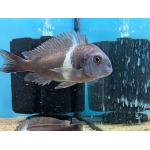


Tropheus duboisi Kigoma Wild Caught
£375.00
Tropheus Duboisi
Price of £375 is for all 11
- Description
- Store Policies
- Enquiries
Description
Species Profile: Tropheus duboisi
Overview and Origin
Tropheus duboisi, commonly known as the White-Spotted Cichlid (juveniles) or Duboisi Cichlid, is a highly sought-after and aggressive cichlid species endemic to the rocky, deep-water regions of Lake Tanganyika, East Africa.
They are classified as a rock-grazing herbivore, surviving almost exclusively on the filamentous algae (aufwuchs) and associated micro-invertebrates found covering the rocks in their natural habitat. This specific dietary requirement is the single most crucial factor in their successful long-term keeping.
Key Characteristics and Appearance
Origin and Habitat
- Origin: Lake Tanganyika, primarily found around rocky areas such as Kigoma and various islands.
- Habitat: Unlike most Tropheus species, T. duboisi juveniles often inhabit slightly deeper water (5-15 metres) before migrating shallower as adults.
Appearance and Colour Change
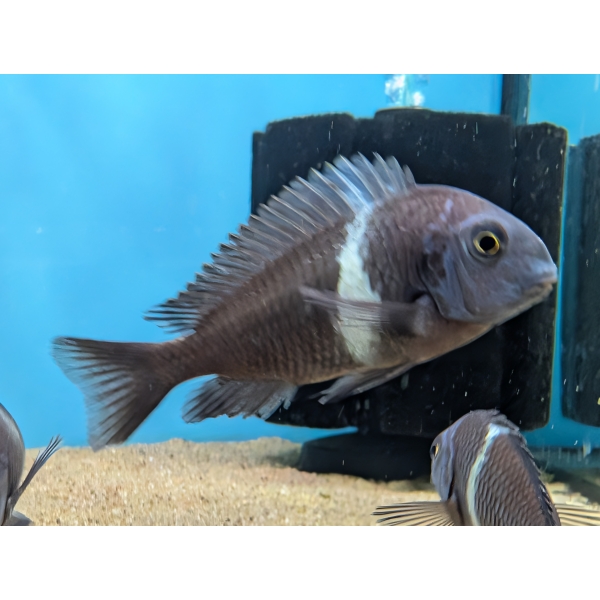
- Juveniles: Juveniles are perhaps their most famous form. They possess a velvety jet-black body adorned with numerous bright white or pale blue spots. This camouflage helps them blend into the dark, rocky crevices of the deeper water.
- Sub-Adult/Adult Transition: As the fish matures (around 5-7 cm), the body pattern undergoes a dramatic change. The spots disappear, and a striking solid vertical band emerges across the mid-body.
- Adults: The adult form features a dark, black-blue or slate-grey head and posterior, separated by a thick, prominent yellow, orange, or white band. The width and intensity of this band vary depending on the specific locale (e.g., Maswa or Malagarasi variants).
- Size: Adults typically reach 10-12 cm (4-5 inches).
Aquarium Requirements and Water Parameters
Maintaining the highly stable and alkaline conditions of Lake Tanganyika is paramount for the health of T. duboisi.
Tank Size
- Minimum: A minimum of 400 litres (approx. 100 UK Gallons) is required to house a successful colony. A long tank (5 to 6 feet) is essential for adequate swimming room and to disperse aggression.
Water Chemistry
Like all Tanganyikan cichlids, they require hard, highly alkaline water. Rapid fluctuations in water chemistry must be avoided.
- Temperature: 24C – 27C (75F – 81F).
- pH: 8.0 – 9.0 (High pH is critical).
- Hardness: Very hard water (gH and kH should be high for buffering).
Decor and Filtration
- Rockwork: The aquarium must be heavily decorated with stable rock structures, caves, and overhangs that reach close to the water surface. This mimics their natural environment, provides grazing surfaces, and is crucial for creating territorial boundaries and breaking up lines of sight.
- Filtration: Excellent mechanical and biological filtration is necessary to handle the bio-load and keep the water pristine.
Diet and Disease Prevention
The diet of T. duboisi must be managed carefully to avoid the highly fatal digestive illness known as Malawi Bloat.
Strict Herbivore Diet
- Primary Food Source: The diet must be composed of high-quality foods rich in vegetable matter and spirulina algae.
- Acceptable Foods: High-quality, spirulina-based pellets or flakes designed specifically for herbivorous African cichlids. Supplement with blanched green vegetables, such as courgette, shelled peas, or spinach.
- Forbidden Foods: Never feed high-protein animal foods such as bloodworms, tubifex worms, beef heart, or high-fat flakes/pellets. These foods are difficult for their long herbivorous digestive tract to process and will trigger Malawi Bloat.
Feeding Regime
Feed very small amounts two or three times a day. Only offer what the fish can consume in under 30 seconds. This grazing-style feeding is healthier for their gut and maintains better water quality.
Social Behaviour and Compatibility
Tropheus are one of the most socially aggressive cichlid groups, necessitating specific housing tactics.
Colony Structure (Mandatory)
- Group Size: T. duboisi must be kept in large colonies of 12 or more individuals. Keeping fewer fish concentrates aggression on one or two individuals, leading to guaranteed deaths.
- Aggression: They form a tight, aggressive hierarchy. A large group size works by dispersing the aggression across all members, preventing any single fish from being bullied to death.
- Introduction: It is strongly recommended to introduce all Tropheus at the same time to prevent established territories from forming before the hierarchy is set.
Compatibility
Due to their aggressive nature and strict diet, tank mates must be chosen with extreme care:
- Suitable Tank Mates: Other peaceful Tanganyikan rock-dwellers that share the same herbivorous diet and water parameter needs, such as certain Julidochromis or Altolamprologus species.
- Avoid: Avoid aggressive species that will compete for territory, and avoid all omnivorous or predatory fish whose high-protein diets would endanger the Tropheus.
Breeding
Tropheus duboisi are maternal mouthbrooders.
Once the fish are conditioned and healthy, breeding is relatively straightforward. The female will hold the fertilised eggs in her mouth until the fry are free-swimming, usually around 3–4 weeks. The fry are typically released in the juvenile (spotted) pattern.
Convenient nationwide delivery; you’re only a click away!
Our nationwide delivery service makes it easy to receive your fish directly at your door, anywhere in the UK, for a flat rate of just £30. This convenient service allows you to order up to 10kg of fish, with the assurance that they will arrive in excellent condition. To make the fishes journey as comfortable as possible we use Oxygen in the fish bags and heat packs in all the boxes of fish we send out.
Please put your desired delivery day in the Order Notes on the Checkout page.
General Enquiries
There are no enquiries yet.