



White Spotted Eartheater
£38.00
Bulk Offer – 3 for £110.00
Discount will apply at checkout.
White Spotted Eartheater
- Description
- Store Policies
- Enquiries
Description
White Spotted Eartheater Satanoperca leucosticta
Profile & Care Sheet
Overview
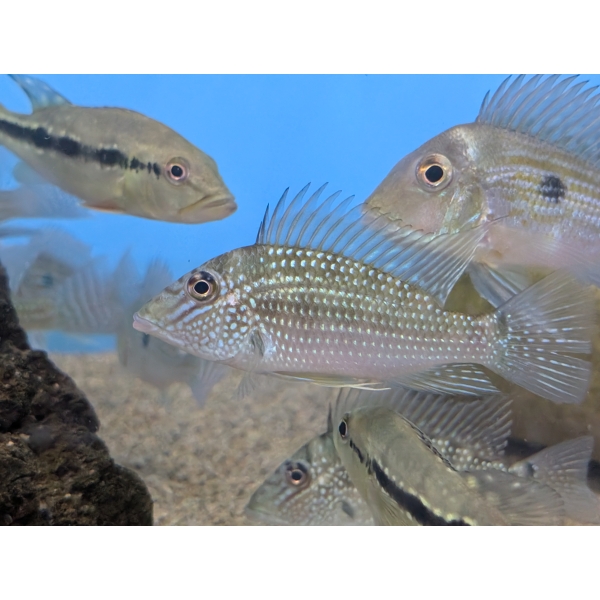
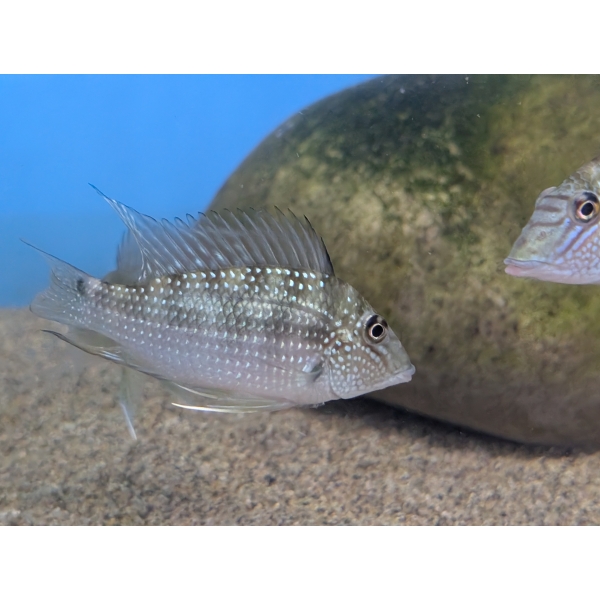
The White Spotted Eartheater (Satanoperca leucosticta) is a beautiful and highly engaging South American cichlid. It gets its common name from its constant, natural behaviour of taking mouthfuls of substrate (preferably sand) and sifting it through its gills to find edible food particles, before expelling the clean sand through its mouth and gills. This behaviour is essential to their health and well-being. They are prized for their striking iridescent white/blue spots on a brown/tan body and generally peaceful nature.
| Trait | Detail |
|---|---|
| Origin | South America (Various river basins, including the Amazon and Essequibo) |
| Family | Cichlidae |
| Temperament | Peaceful, shy, and constantly active substrate sifter. Best kept in groups. |
| Adult Size | 18 to 22 cm (approx 7 to 9 inches) |
| Lifespan | 10 to 15 years |
| Diet | Omnivore/Detritivore (Substrate Sifter) |
| Aquarium Type | Large community tank, South American biotope with soft substrate. |
Water Parameters
Eartheaters require high-quality, stable, and warm water. Their constant sifting means any pollutants or sharp substrate can cause significant health issues.
| Parameter | Recommended Range | Notes |
|---|---|---|
| Temperature | 25C to 29C (77F to 84F) | Requires stable, high tropical heat. |
| pH | 6.0 to 7.5 | Soft, slightly acidic to neutral water is ideal. |
| Hardness (GH) | 3 to 12 dGH | Soft to medium water is generally preferred. |
| Filtration | Excellent mechanical and biological filtration is essential. | Necessary to handle the massive amount of detritus stirred up during sifting. |
| Water Changes | Minimum 30% to 50% weekly is mandatory. | Sensitive to nitrate buildup; must maintain pristine water conditions. |
Aquarium Setup
- Tank Size: Due to their adult size, active nature, and need for group housing, a minimum tank size of 380 litres (approx. 85 UK gallons) is required for a small group of 5 or more fish. The tank needs a large footprint (width and length) to provide ample sifting area.
- Substrate: Fine, soft, silica-free sand is absolutely crucial. Gravel must be avoided as it damages their gills and mouths when they sift. The sand layer should be at least 5 to 8 cm deep to allow for natural behaviour.
- Decoration: Use smooth river stones, large pieces of driftwood, and robust, well-rooted plants (e.g., Cryptocoryne, Anubias attached to hardscape). Ensure decorations are stable, as the fish’s constant digging will destabilise lightweight items.
- Lighting: Moderate lighting is suitable. Floating plants can help diffuse light and create a natural look.
- Water Movement: Gentle to moderate flow, mimicking a slow-moving river environment.
Feeding
As detritivores and substrate sifting omnivores, their diet should be composed of sinking foods that they can filter from the sand.
- Primary Diet: Sinking pellets or granules designed for cichlids, containing a high-quality blend of protein and vegetable matter.
- Supplements: Offer frozen or live foods regularly, such as Bloodworms, Daphnia, Mysis Shrimp, and chopped Earthworms. These should sink quickly.
- Frequency: Feed small amounts 2-3 times per day, allowing the food to settle on the sand for them to sift.
Behaviour & Tank Mates
- Social Needs: White Spotted Eartheaters are highly social and must be kept in a group (shoal) of at least 5 to 7 individuals. Keeping them singly will cause stress, shyness, and poor health. When kept in a group, they display fantastic, natural schooling and sifting behaviour.
- Temperament: They are generally peaceful and shy, making them excellent community cichlids. They rarely threaten tank mates but may become territorial during breeding.
- Suitable Tank Mates: Good companions include other large, peaceful South American fish that occupy the middle or upper water column: large, active Tetras (e.g., Silver Dollars, Congo Tetras), peaceful Catfish (e.g., Plecostomus, large Corydoras), and other peaceful South American cichlids (e.g., Angelfish, Severums).
- Avoid: Very small fish that could be accidentally consumed while sifting, or aggressive, boisterous species that would outcompete them for food or stress them.
Breeding
Satanoperca leucosticta are delayed larvophilic mouthbrooders—a fascinating and unique breeding method.
- Pairing: They are difficult to sex externally; buying a group and allowing a pair to form naturally is the best approach.
- Spawning: The pair will clean a flat rock or depression in the sand. The female lays the eggs, and the male fertilises them.
- Parental Care (Unique): Both parents take turns guarding the eggs on the substrate for a few days. Once the eggs hatch into larvae, the parents (usually the female, but often both) collect the larvae and hold them in their mouth until they become free-swimming fry.
- Fry Care: Once the fry are released, they are large enough to accept newly hatched Brine Shrimp nauplii and crushed flake food. The parents will continue to guard and shelter the fry in their mouth when danger is perceived.
Convenient nationwide delivery; you’re only a click away!
Please put your desired delivery day in the Order Notes on the Checkout page.
General Enquiries
There are no enquiries yet.