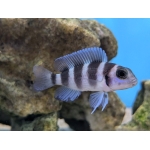
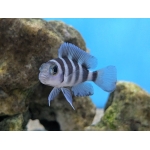
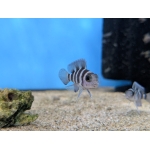


Five-Bar Cichlid Lamprologus tretocephalus
£15.00
5 Bar Cichlid Lamprologus tretocephalus
Bulk Offer – 3 for £42.00
Discount will apply at checkout.
- Description
- Store Policies
- Enquiries
Description
Five-Bar Cichlid (Lamprologus tretocephalus):
Species Fact Sheet:
The Five-Bar Cichlid (Lamprologus tretocephalus) is a striking, highly predatory cichlid endemic to the ancient waters of Lake Tanganyika. It is highly regarded by advanced hobbyists for its bold, monochromatic patterning, robust nature, and fascinating predatory instincts.
Taxonomy and Common Names
-
- Scientific Name: Lamprologus tretocephalus
- Common Names: Five-Bar Cichlid, Five-Bar Lamprologus, Tretocephalus
- Family: Cichlidae
Habitat and Origin
This species is exclusively native to the African Rift Valley.
-
- Geographical Range: Endemic to Lake Tanganyika, distributed widely across the lake.
- Natural Environment: Found predominantly in transitional zones where sandy floors meet rocky reefs, typically at depths between 5 and 15 metres.
- Water Conditions: Inhabits exceptionally stable, hard, and highly alkaline water.
Physical Characteristics
-
- Adult Size: Males typically reach a maximum length of 14–15 cm (5.5–6 inches), whilst females remain slightly smaller, usually topping out at 10–12 cm (4–5 inches).
- Coloration: Features a stark silvery-white to light-blue base body color, contrasted sharply by five thick, vertical black bars running across the flanks. A distinct dark band also runs between the eyes. Mature specimens develop beautiful iridescent blue highlights along the edges of their fins.
- Morphology: Possesses a powerful, elongated body with a pointed snout and specialized pharyngeal teeth adapted for crushing hard shells.
Aquarium Care and Requirements
Tank Parameters
-
- Water Temperature: 24°C – 27°C
- Acidity Range: pH 8.0 – 9.0 (Strictly alkaline)
- Water Hardness: 12–25 dGH
- Minimum Tank Volume: 300 litres for a single individual or a bonded pair, owing to their high territorial aggression.
Substrate and Decor
-
- Substrate: A blend of fine aragonite sand or crushed coral is ideal to help buffer the pH and hardness naturally.
- Shelter: Construct sturdy, extensive rock piles along the back and sides of the aquarium to create deep caves and caves. Rocks must be secure, as this species likes to dig out the sand beneath its chosen lair.
- Filtration: High-capacity external filtration with moderate water movement is necessary to maintain pristine water quality, as they are highly sensitive to organic pollutants.
Diet and Nutrition
In its natural habitat, the Five-Bar Cichlid is a specialized molluscivore, foraging along the substrate for snails and small invertebrates.
-
- Commercial Foods: High-quality sinking pellets, granules, and protein-focused cichlid flakes.
- Live and Frozen Foods: Mysis shrimp, krill, brine shrimp, chopped prawns, and occasionally small aquatic snails.
- Dietary Note: Avoid feeding mammalian meats (such as beef heart), which can lead to severe digestive issues.
Behaviour and Tankmates
-
- Social Structure: Highly solitary and fiercely territorial. They do not tolerate conspecifics well unless they are a well-matched breeding pair.
- Temperament: Aggressive and assertive. They will vigorously defend their chosen cave against any intruders.
- Suitable Tankmates: Robust, fast-moving Tanganyikan cichlids such as Cyprichromis, larger Julidochromis species, or Altolamprologus (Calvus/Compreciessiceps).
- Avoid: Small shell-dwellers (Lamprologus ocellatus etc.), peaceful featherfins, or species from other lakes with vastly different water requirements, such as South American eartheaters.
Breeding
Breeding Lamprologus tretocephalus in captivity is challenging due to their intense pair-bonding process and aggressive nature.
-
- Spawning: They are secretive cave-spawners. The female will deposit anywhere from 200 to 500 eggs inside the deepest recess of a rocky cave.
- Parental Care: Both parents defend the nesting site with extreme ferocity. The female generally tends directly to the eggs, while the male patrols the wider territory boundary.
- Rearing Fry: Eggs hatch in roughly 3–4 days. Once the fry are free-swimming, they can be fed freshly hatched brine shrimp nauplii or finely powdered fry foods.
Convenient nationwide delivery; you’re only a click away!
Our nationwide delivery service makes it easy to receive your fish directly at your door, anywhere in the UK, for a flat rate of just £30. This convenient service allows you to order up to 10kg of fish, with the assurance that they will arrive in excellent condition. To make the fishes journey as comfortable as possible we use Oxygen in the fish bags and heat packs in all the boxes of fish we send out.
For your peace of mind we enclose a slip which will explain what to do in the event of a fish not traveling too well.
We use a licensed courier to deliver your fish directly to you door and will be with you by 1pm the next day.
Our delivery days are as follows:
Tuesday for Wednesday delivery
Wednesday for Thursday delivery
Thursday for Friday delivery
Please put your desired delivery day in the Order Notes on the Checkout page.
General Enquiries
There are no enquiries yet.