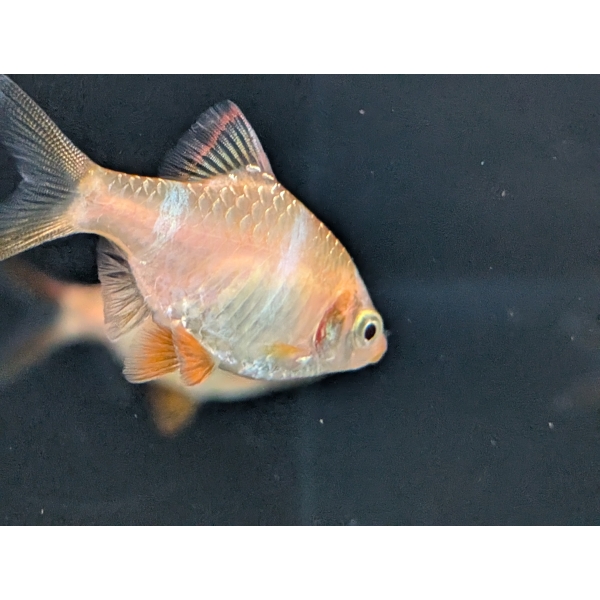
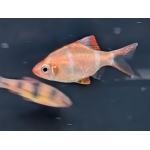
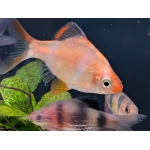
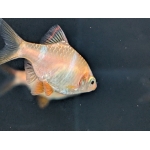

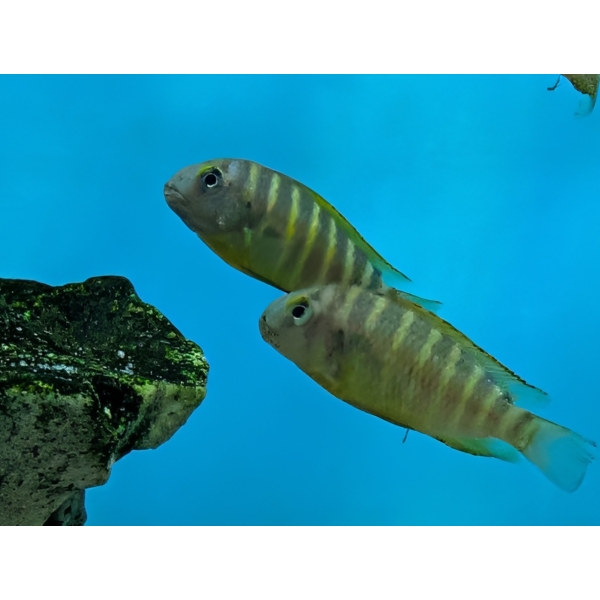
Albino Tiger Barb Puntigrus tetrazona
£4.00
Bulk Offer – 6 for £22.00
Discount will apply at checkout.
- Description
- Store Policies
- Enquiries
Description
Albino Barb (Puntigrus tetrazona):
A Comprehensive Care Guide
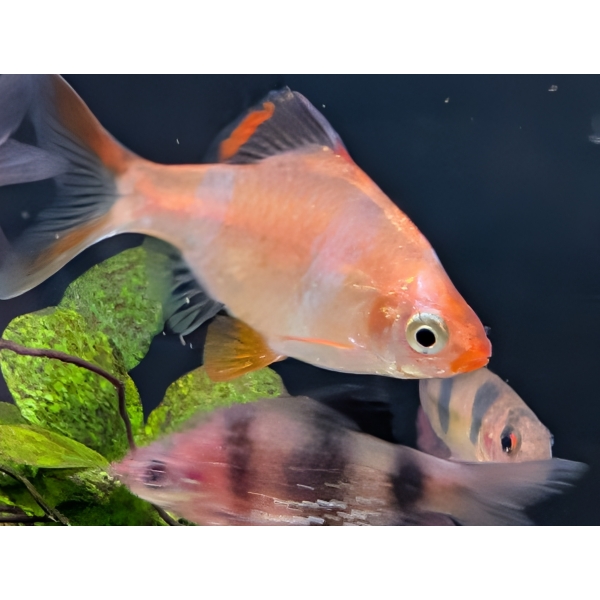
The Albino Barb is a highly sought-after and active fish in the aquarium hobby. It is not a distinct species, but rather a genetic colour morph of the well-known Tiger Barb (Puntigrus tetrazona). Prized for its striking, pearly-white body and red eyes, it adds a unique and lively presence to a freshwater community tank. While its beautiful appearance is a major draw, its care requires an understanding of its boisterous and playful temperament. With the right setup, the Albino Barb can be a fantastic and rewarding addition to your aquarium.
Taxonomy and Classification
- Kingdom: Animalia
- Phylum: Chordata
- Class: Actinopterygii
- Order: Cypriniformes
- Family: Cyprinidae
- Genus: Puntigrus
- Species: tetrazona
The Albino Barb is a variant of the Tiger Barb, a classic member of the Cyprinidae family. The scientific name reflects the parent species.
Habitat and Distribution
The Tiger Barb, from which the Albino Barb originates, is native to the freshwater ecosystems of Southeast Asia. Its natural habitat is typically clear, fast-moving streams and tributaries in Borneo, Sumatra, and the Malay Peninsula, often with a substrate of sand and gravel.
Physical Characteristics
The Albino Barb typically grows to a maximum size of 6-7 cm (around 3 inches). Its most notable features include:
- Colouration: A distinctive, pale pinkish-white body due to a lack of pigment.
- Eyes: Bright red eyes, a classic trait of albinism.
- Fins: The fins are often a reddish-orange hue, providing a pleasant contrast to the light body.
- Body Shape: A deep, laterally compressed body, similar to the Tiger Barb, but without the iconic black stripes.
Diet and Feeding
Albino Barbs are omnivorous. In their natural habitat, they would feed on small insects, worms, and some plant matter. In the aquarium, they are not fussy eaters and will readily accept a variety of foods.
Suitable foods include:
- Flake & Pellets: High-quality flake or small pellets formulated for tropical fish should be the staple of their diet.
- Frozen & Live Foods: Supplement their diet with protein-rich foods like frozen or live brine shrimp, daphnia, and bloodworms to boost their vitality and immune system.
- Vegetable Matter: They may also graze on algae and soft plant matter, so a balanced diet is important.
Behaviour and Temperament
This is a key consideration when keeping Albino Barbs. They are an active, semi-aggressive, and nippy species, especially if they are not kept in a large enough group. They are a shoaling fish that will establish a pecking order, which can sometimes result in them harassing other fish.
To manage their temperament:
- Keep them in a shoal of at least six to eight individuals. This allows them to focus their nipping and playful aggression on each other, preventing them from harassing other tank mates.
- They are fast and active swimmers that spend most of their time in the middle of the water column.
Aquarium Care
Providing the right environment is crucial for the health and happiness of your Albino Barbs.
- Tank Size: A minimum of 100 litres (25 gallons) is recommended for a small shoal. A larger tank is better to diffuse their semi-aggressive behaviour and provide ample swimming space.
- Water Parameters:
- Temperature: 22–26°C (72–79°F)
- pH: 6.0–7.0 (They prefer slightly acidic to neutral water)
- Hardness: 5-12 dGH (Soft to moderately hard water)
- Filtration: A reliable filter with a moderate flow is suitable. They need clean, well-oxygenated water.
- Decor: A well-planted tank with open swimming space is ideal. Driftwood and smooth rocks can provide hiding spots and visual breaks.
- Tank Mates: Choose tank mates carefully. Suitable companions include other fast-moving, robust fish that can hold their own, such as other Barbs (e.g., Cherry Barbs, Rosy Barbs), some species of large Tetras, Corydoras, and Loaches. Avoid slow-moving, long-finned fish like Angelfish, Bettas, and Gouramis, as the Albino Barbs are likely to nip their fins.
- Maintenance: A 25% weekly water change is essential to maintain good water quality and keep nitrate levels low.
With a properly sized tank and compatible tank mates, the Albino Barb will thrive and become a beautiful and dynamic focal point in your aquarium.
Convenient nationwide delivery; you’re only a click away!
General Enquiries
There are no enquiries yet.