


Blood Orange Shrimp
£6.00
Bulk Offer – 6 for £33.00
Discount will apply at checkout.
Blood Orange Shrimp
- Description
- Store Policies
- Enquiries
Description
Blood Orange Shrimp (Neocaridina davidi var. “Orange”)
Species Profile:
Common Names: Blood Orange Shrimp, Orange Sakura Shrimp, Sunkist Shrimp, Orange Cherry Shrimp.
Scientific Name: Neocaridina davidi (Colour Morph).
Family: Atyidae.
1. Introduction
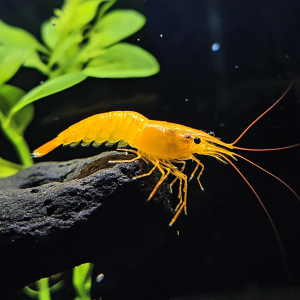
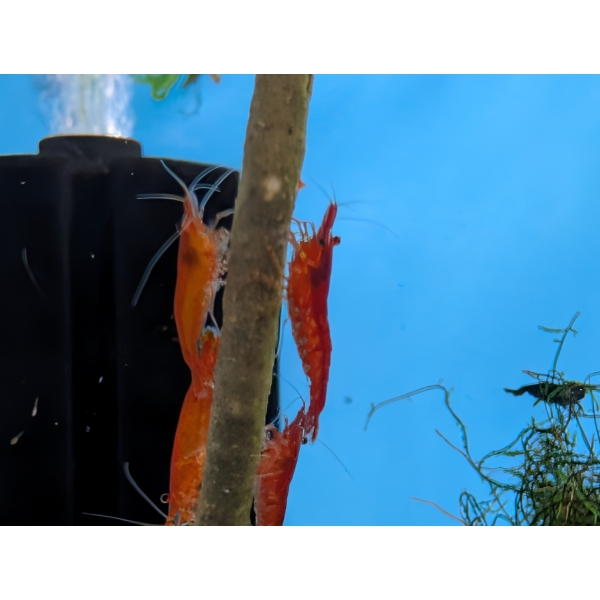
The Blood Orange Shrimp is a vibrant, eye-catching freshwater crustacean. It is a selectively bred colour morph of the incredibly popular Cherry Shrimp (Neocaridina davidi).
While standard Orange shrimp can be pale or translucent, the “Blood Orange” or high-grade “Orange Sakura” variety is prized for its deep, saturated citrus-orange colouration. They are renowned for their hardiness, algae-eating capabilities, and ease of breeding, making them an ideal choice for both beginner aquarists and seasoned shrimp keepers.
2. Origins and Classification
-
Wild Origin: The wild form of Neocaridina davidi is native to Taiwan, Japan, and Korea. However, the wild shrimp is typically a muddy brown or transparent colour to blend into riverbeds.
-
The Morph: The Blood Orange colouration does not exist in the wild; it is the result of years of selective line-breeding in captivity to isolate the orange pigment.
3. Appearance and Identification
-
Colour: A solid, vivid orange that can range from the colour of a tangerine to a deep, reddish blood-orange.
-
Grading:
-
Low Grade: Translucent body with faint orange spots or lines.
-
High Grade (Blood Orange/Sakura): Solid, opaque orange coverage on the body and legs.
-
-
Sexual Dimorphism:
-
Females: Larger, more robust, and significantly more colourful (solid opaque orange). They may display a “saddle” (yellow/green egg patch behind the head) or carry eggs under their tail (berried).
-
Males: Smaller, slender, and often paler or more translucent than the females.
-
-
Size: Maximum size is approximately 2.5 cm to 3 cm (1 to 1.2 inches).
4. Aquarium Requirements
These shrimp are robust, but they require a stable environment to thrive and molt successfully.
-
Tank Size: They are perfect for nano aquariums. A minimum of 15–20 litres is sufficient for a colony.
-
Filtration: A sponge filter is the best choice. It provides gentle flow, high oxygenation, and a surface for them to graze on. Crucially, it prevents tiny shrimplets from being sucked into the intake.
-
Substrate: Inert substrate is preferred (sand or gravel). Unlike Caridina shrimp (Crystal Reds), Blood Orange shrimp do not require active buffering soil.
-
Décor:
-
Moss (Essential): Java Moss, Christmas Moss, or moss balls are vital. They provide hiding spots for babies and a surface for biofilm to grow.
-
Plants: They love planted tanks. Anubias, Bucephalandra, and floating plants are excellent additions.
-
Wood: Cholla wood or small driftwood pieces provide grazing surfaces.
-
5. Water Parameters
Neocaridina are adaptable, but stability is more important than hitting a specific number. Avoid rapid changes.
-
Temperature: 18°C – 28°C (64°F – 82°F). They are essentially coldwater tolerant and can often live in unheated tanks in centrally heated British homes. Warmer water speeds up their metabolism and breeding but shortens their lifespan.
-
pH: 6.5 – 8.0. Neutral to slightly alkaline water is best.
-
Hardness: They need minerals to build their shells.
-
GH (General Hardness): 4 – 8 dGH.
-
KH (Carbonate Hardness): 3 – 15 dKH.
-
-
Copper Warning: Invertebrates are deadly sensitive to copper. Ensure any plant fertilisers or medications used in the tank are “Shrimp Safe” and copper-free.
6. Diet and Feeding
Blood Orange Shrimp are constant grazers and scavengers.
-
Primary Food Source: Biofilm (micro-organisms) and soft algae growing on rocks, glass, and plants.
-
Supplemental Food:
-
Specific Shrimp Pellets/Wafers (rich in calcium).
-
Blanched Vegetables: Courgette, spinach, kale, or nettle leaves (boil for a few minutes to soften, then cool).
-
Leaf Litter: Indian Almond Leaves (Catappa) or dried Mulberry leaves.
-
-
Feeding Frequency: Feed very sparingly (every 2–3 days). Overfeeding leads to water quality issues and pest snails.
7. Behaviour and Tank Mates
-
Temperament: Completely peaceful. They have no means to attack other fish.
-
Molting: You will occasionally see a clear white “ghost” shrimp shell in the tank. This is the exuvia (molted shell). Do not remove it. The shrimp will eat it to recycle the calcium for their new shell.
-
Tank Mates:
-
Best: Kept in a species-only tank or with Snails (Nerite, Ramshorn).
-
Good: Otocinclus catfish (the only truly shrimp-safe fish).
-
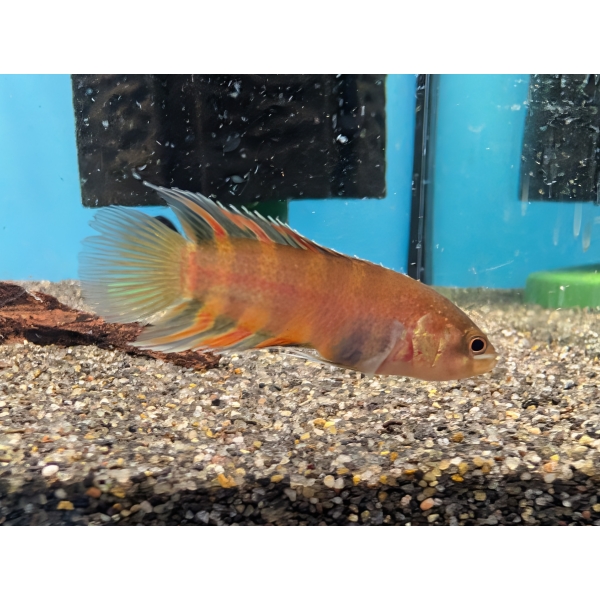
Risky but Common: Small nano fish like Chilli Rasboras or Neon Tetras may eat the baby shrimp but will leave adults alone.
-
Avoid: Angelfish, Cichlids, Goldfish, and Gouramis. As the saying goes: “If it fits in the mouth, it is food.”
-
8. Breeding
Blood Orange Shrimp breed readily in freshwater without any human intervention.
-
The Process: A female will moult, release pheromones, and mate. She will then move eggs from her saddle to her pleopods (swimmerets under the tail). She is now “berried.”
-
Incubation: She carries the eggs for roughly 30 days, fanning them to keep them oxygenated.
-
Hatching: Unlike saltwater shrimp, there is no larval stage. Miniature, fully formed shrimplets hatch directly from the eggs. They are independent immediately.
9. Summary Checklist
| Requirement | Specification |
| Minimum Tank Size | 15–20 Litres |
| Temperature | 18°C – 28°C |
| pH | 6.5 – 8.0 |
| Water Hardness | Moderate (Needs Calcium) |
| Diet | Algae, Biofilm, Shrimp Pellets, Blanched Courgette |
| Substrate | Inert Sand or Gravel |
| Compatibility | Peaceful (Risk of predation by fish) |
| Critical Warning | Copper is toxic to shrimp |
| Adult Size | 2.5–3 cm |
Convenient nationwide delivery; you’re only a click away!
Please put your desired delivery day in the Order Notes on the Checkout page.
General Enquiries
There are no enquiries yet.