
Bone Head Catfish
£10.00
Bulk Offer – 3 for £27.00
Bone Head Catfish
- Description
- Store Policies
- Enquiries
Description
Bone Head Catfish (Hoplisoma osteocarus)
Species Profile:
Common Names: Bone Head Catfish, Hoplisoma osteocarus.
Scientific Name: Hoplisoma osteocarus
Family: Callichthyidae (Armoured Catfishes).
1. Introduction
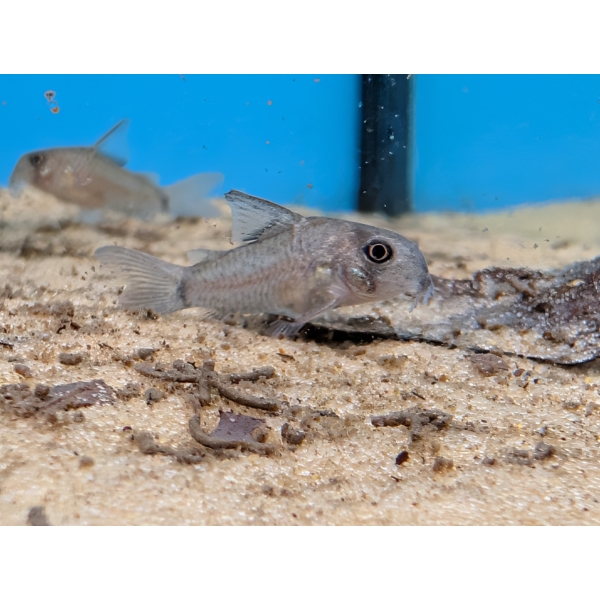
The Bone Head Catfish, officially known as Corydoras osteocarus, is a charming and often overlooked species of small armoured catfish. Despite its imposing common name, derived from a robust skeletal structure often associated with the Hoplosternum genus, this fish is a gentle, peaceful bottom-dweller.
It is closely related to the popular Corydoras species and shares their characteristic peaceful temperament, ease of care, and entertaining habit of constantly foraging in the substrate. Its small size makes it an excellent choice for smaller community tanks.
2. Natural Habitat and Distribution
-
Geography: Native to tropical South America, primarily found in the upper Amazon River basin, specifically in regions of Brazil (e.g., Rio Negro tributaries) and possibly neighbouring countries.
-
Environment: They inhabit clear-water streams, smaller tributaries, and backwaters, usually found over substrates of fine sand or leaf litter. These environments are often slow-moving and well-oxygenated.
-
Water Conditions: They prefer soft, acidic water, often stained with tannins.
3. Appearance and Identification
Corydoras osteocarus has a body structure that is somewhat intermediate between true Corydoras and the larger Hoplosternum species, which is likely the source of its confusing common name.
-
Body: Short, robust, and moderately deep-bodied. Like all members of the Callichthyidae family, their bodies are covered in two rows of bony, overlapping plates (scutes) instead of traditional scales.
-
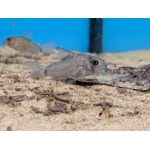
Colouration: The base colour is typically a greyish-tan or olive-brown. The body is covered in a pattern of fine, dark spots that can sometimes merge into short, broken lines, offering a speckled or mottled appearance.
-
Barbels: They possess the characteristic pair of sensitive barbels used for searching the substrate for food.
-
Size: A true dwarf fish, reaching an adult length of only 4 cm to 5 cm (1.6 to 2 inches).
4. Aquarium Requirements
Like all Corydoras species, the most critical factor for their long-term health is the substrate used.
-
Tank Size: A minimum tank size of 60 cm (approximately 54 litres or 15 imperial gallons) is suitable for a small school.
-
Water Temperature: 24°C – 28°C (75°F – 82°F). They are true tropical fish and require stable, warm conditions.
-
Filtration and Flow: Gentle, efficient filtration is recommended. They do not require strong currents.
-
Substrate (Crucial): Fine sand is essential. As dedicated bottom-dwellers, they constantly use their barbels to dig and sift the substrate for food. Coarse, jagged gravel will damage their barbels, leading to infection and the inability to feed properly.
-
Décor: Provide driftwood, smooth rocks, and dense planting to offer security and shaded areas. They appreciate a cover of Indian Almond Leaves or peat filtration to replicate blackwater conditions.
5. Water Parameters
-
pH: 6.0 – 7.2 (Soft and slightly acidic is ideal, but they tolerate neutral water well).
-
Hardness: Soft to moderately soft water (2 – 10 dGH).
-
Maintenance: They are sensitive to high concentrations of dissolved organic waste. Routine weekly partial water changes (25%) are necessary.
6. Diet and Feeding
The Bone Head Catfish is an omnivorous scavenger that feeds primarily on benthic organisms.
-
Staple Diet: High-quality sinking tablets, wafers, or granules formulated for bottom-feeding fish.
-
Supplemental Foods: Their diet should be regularly varied with small live or frozen foods, such as bloodworm, Daphnia, and brine shrimp (Artemia). This ensures proper condition and nutrients.
-
Foraging: Ensure food actually reaches the substrate, as they are often outcompeted by faster mid-water fish.
7. Behaviour and Compatibility
-
Schooling (Essential): Like all Corydoras, they are social and must be kept in groups. A minimum school size of 6 or more individuals is required to ensure their security and encourage natural behaviour.
-
Temperament: They are extremely peaceful, non-aggressive, and active bottom-dwellers. They will constantly patrol the substrate.
-
Tank Mates: Excellent companions for a peaceful community tank.
-
Suitable Companions: Small, peaceful Tetras (e.g., Neon, Ember), Dwarf Cichlids (Apistogramma), Pencilfish, Rasboras, and small Gouramis.
-
Avoid: Large, boisterous, or highly aggressive bottom-dwelling cichlids that might harass them or prevent them from feeding.
-
8. Summary Checklist
General Enquiries
There are no enquiries yet.