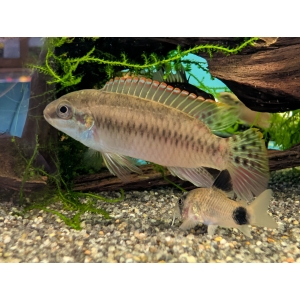
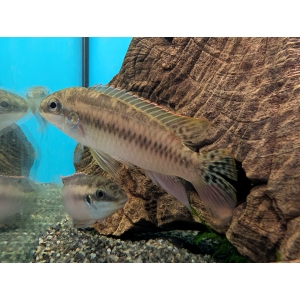

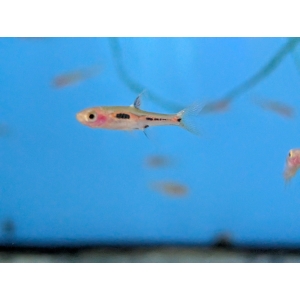
Blue Fin Guinean Dwarf Cichlid (Enigmatichromis Lucanusi)
£35.00
Blue Fin Guinean Dwarf Cichlid (Enigmatichromis Lucanusi)
Price is per pair.
- Description
- Store Policies
- Enquiries
Description
Blue Fin Guinean Dwarf Cichlid
Enigmatichromis lucanusi:
Species Overview & Care Guide:
The Enigmatichromis lucanusi (commonly known as the Blue-Fin Cichlid) is a rare, breathtakingly beautiful dwarf cichlid endemic to the forested streams of Guinea in West Africa. Known for its striking iridescent blue and yellow coloration, as well as its fascinating parental behaviours, this species is a highly prized gem among aquarium hobbyists and cichlid enthusiasts looking for something truly unique.
Species Quick Facts
| Parameter | Specification |
| Scientific Name | Enigmatichromis lucanusi |
| Common Name | Blue-Fin Cichlid, Lucanus’ Dwarf Cichlid |
| Adult Size | Males: 3.1 inches (8 cm) | Females: 2.4 inches (6 cm) |
| Temperament | Generally peaceful, but fiercely territorial when breeding |
| Lifespan | 3 – 5 years with proper care |
| Minimum Tank Size | 75 Litres (approx. 20 Gallons) for a single pair |
Ideal Water Parameters
In their natural habitat, Enigmatichromis lucanusi inhabit soft, acidic, and slow-moving rainforest streams. Replicating these conditions is the key to maintaining their vibrant colours and encouraging breeding success.
-
Temperature: 24C to 27C (75F to 81F)
-
pH Range: 5.5 – 6.5 (Strictly prefers acidic water conditions)
-
Water Hardness: 1 – 6 dGH (Soft water is essential)
Aquarium Setup & Aquascaping
Unlike many larger rift-valley cichlids, Enigmatichromis lucanusi will not dig up your aquascape or destroy vegetation. They thrive best in a natural, heavily structured environment.
Aquascaping Tip: Use a dark sand substrate alongside plenty of leaf litter (such as Indian Almond Leaves or Beech leaves) to mimic the forest floor. The natural tannins released will tint the water slightly, lowering the pH and making the metallic blues of the fish truly stand out.
-
Caves and Hiding Places: This species is a secretive cave-spawner. It is vital to provide plenty of visual barriers and potential spawning sites using coconut shells, terracotta pots, bogwood, and rock structures.
-
Live Plants: Incorporate robust West African plants like Anubias, Bolbitis (African Water Fern), and various Cryptocoryne species to create a sense of security.
-
Filtration: Efficient, gentle filtration is preferred. A mature sponge filter or a baffled external canister filter works perfectly, as these fish dislike strong, turbulent currents.
Diet & Nutrition
Enigmatichromis lucanusi are omnivorous benthophagous fish, meaning they naturally sift through the substrate for food. They are not fussy eaters in captivity, but a varied diet is crucial for their colour development:
-
Core Diet: High-quality sinking cichlid pellets or crushed flakes.
-
Live & Frozen Foods: They absolutely thrive on live or frozen bloodworms, brine shrimp, daphnia, and white mosquitoes.
-
Vegetable Matter: Occasional spirulina-enriched foods will help balance their digestive systems.
Social Behaviour & Compatibility
While they are cichlids, they are far more peaceful than their larger relatives. However, clear boundaries must be respected.
-
Pairing: It is best to keep them in bonded, monogamous pairs. Keeping multiple males in a small tank will lead to intense territorial fighting.
-
Suitable Tank Mates: Ideal companions include peaceful mid-water target fish such as African Red-Eye Tetras, Jellybean Tetras, or small Barbus species. They can also be safely housed with peaceful catfish like Synodontis nigriventris (Upside-Down Catfish) or small Loricariids (Bristlenose Plecos).
-
Avoid: Avoid housing them with boisterous substrate-dwelling species or overly aggressive cichlids (like certain Pelvicachromis species) to prevent territorial clashes.
Breeding Insights
Enigmatichromis lucanusi are exemplary parents. They are pair-bonding cave spawners, where the female typically takes the lead in selecting and cleaning the cave site.
During courtship, the female develops an incredibly intense, dark purple or deep red belly. Once the eggs are laid, the female guards the inside of the cave while the male fiercely patrols the surrounding perimeter. Once hatched, the parents will lead the free-swimming fry around the tank in a tight cloud, protecting them from any potential threats.
General Enquiries
There are no enquiries yet.