
Fire Ant Tetra Hyphessobrycon myrmex
£10.00
Bulk Offer – 6 for £55.00
Discount will apply at checkout.
- Description
- Store Policies
- Enquiries
Description
Fire Ant Tetra (Hyphessobrycon myrmex):
Species Profile:
Fire Ant Tetra (Hyphessobrycon myrmex) is an exquisite, ultra-compact, and structurally striking freshwater fish belonging to the family Characidae. Described scientifically in 2017 by ichthyologists Pastana, Dagosta, and Ohara, this remarkable species remains a highly sought-after gem within premium British nano-aquarium and aquascaping circles.
Its scientific name, myrmex, is derived from the Greek word for ant. This dual-purpose descriptor pays homage to both the diminutive adult size of the fish and its native type locality: the Rio Formiga (“Ant River” in Portuguese), a pristine tributary of the Juruena River basin within the upper Rio Tapajós drainage in Brazil. For aquarists seeking a truly unique, small-scale schooling species with a fascinating colour dynamic, the Fire Ant Tetra represents an elite selection.
Morphology and Extreme Sexual Dichromatism
The most compelling biological attribute of Hyphessobrycon myrmex is its dramatic sexual dichromatism (where males and females exhibit completely different colour palettes), a feature that catches many keepers by surprise.
-
Size and Silhouette: This is a genuine, miniature nano fish. Adults rarely exceed 2 to 2.4 centimetres in standard length, making them significantly smaller than standard neon or lemon tetras. They possess a moderately compressed, sleek body form built for agile swimming among submerged structures.
-
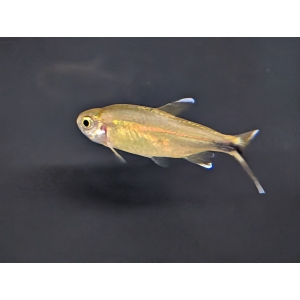
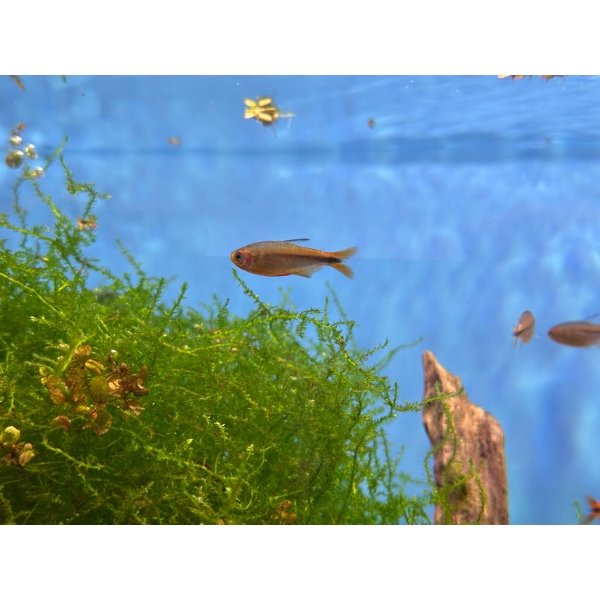
The Crimson Male: Fully mature, dominant males are a sight to behold. They develop an incredibly intense, glowing fiery red-to-orange body tone reminiscent of a forest fire ant. In prime conditions, the dorsal ridge may display a subtle, iridescent bluish shimmer.
-
The Dark Flank Stripe: A distinguishing anatomical feature of H. myrmex is a broad, diffuse dark band running across the lower half of the body flanks, concentrated heavily above the anal fin base. Dark, dense chromatophores (colour pigment cells) are also tightly clustered along the unbranched rays of the dorsal fin.
-
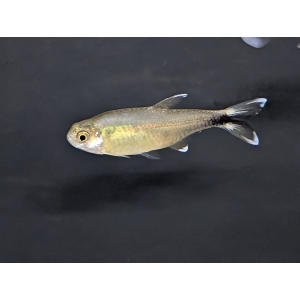
The Translucent Female: In stark contrast to the brilliant males, female Fire Ant Tetras are understated and subtle. They display a highly reflective, pale platinum-yellow to silver colouration with mostly clear fins, allowing them to remain perfectly camouflaged in the wild.
Aquarium Requirements and Water Parameters
The Fire Ant Tetra is a hardy and adaptable species once established in a mature, biologically stable ecosystem. Because of their tiny mass, they have a low bioload, but they are sensitive to sudden spikes in ammonia or volatile shifts in water chemistry.
Optimal Hydrochemical Targets
| Parameter | Target Range |
| Water Temperature | 22°C to 28°C (71.6°F to 82.4°F) — 24°C to 25°C is ideal for long-term health |
| pH Range | 6.0 to 7.2 (Thrives best in slightly acidic to soft neutral water loops) |
| General Hardness (dGH) | 2 to 12 dGH (Requires soft to moderately soft water profiles) |
| Carbonate Hardness (dKH) | 1 to 6 dKH |
| Minimum Tank Size | 45 Litres (approx. 10 Imperial Gallons) to accommodate a proper shoal |
Environmental Design: Replicating the Rio Formiga
In their native Brazilian biotopes, Fire Ant Tetras are found in highly transparent, slow-moving waters where the riverbeds are composed of fine sand, smooth river stones, and pockets of fallen organic leaves and twigs.
The Master Display Layout
To successfully showcase this species, the aquarist should implement a “Nature Style” layout. Use a fine sandy substrate accented with smooth, dark grey stones and intricate networks of spiderwood or bogwood branches. The high-contrast boundary between the bright orange-red fish and the dark, organic textures of the wood will create a breathtaking focal point.
-
Flora Arrangement: Plant dense patches of fine-leaved background vegetation such as Rotala rotundifolia or Limnophila sessiliflora, but leave a generous, unobstructed open swimming corridor right across the front-middle section of the enclosure.
-
Shaded Surface Canopy: Introduce floating cover like Amazon Frogbit (Limnobium laevigatum) or Salvinia. The hanging root structures diffuse intense aquarium lighting, casting natural shadows that make the small tetras feel completely secure, encouraging the males to display their finest fiery colouration.
-
Filtration and Flow: Inhabit sectors with a gentle to moderate water current. An over-powered powerhead will exhaust these tiny fish. A mature, air-driven sponge filter or a canister filter with an adjustable spray bar directed against the glass is perfect for providing clean, highly oxygenated water without creating an unmanageable torrent.
Nutritional Guidelines and Dietary Schedule
Fire Ant Tetras are micro-predatorial omnivores. Given their miniature mouths, offering correctly sized food items is critical to preventing starvation or mouth injuries:
-
The Staple Ration: Utilize high-quality, cold-processed micro pellets or finely crushed tropical flakes. Ensure the food particles are under 1 millimetre in size so the fish can swallow them effortlessly.
-
Live and Frozen Boosts: Offer frequent micro-feedings of live or frozen Cyclops, Daphnia, Bosmina, and freshly hatched brine shrimp nauplii (Artemia). These nutrient-dense treats provide natural carotenoids that maintain the fiery red pigment of the males.
-
Frequency: Feed small, controlled pinches twice a day. Only offer what the shoal can entirely clear from the water column within 60 seconds to maintain pristine water quality.
Behaviour and Community Compatibility
The Shoaling Mandate
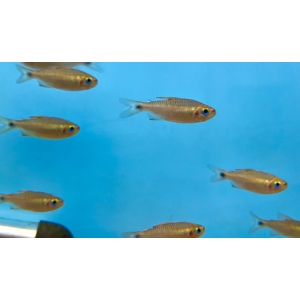
Hyphessobrycon myrmex is an obligate, group-dependent shoaling fish. You must house them in a absolute minimum group of 8 to 10 individuals; a larger assembly of 12 to 15 is highly recommended. When kept in small numbers, individual males can become overly defensive or anxious, leading to pale colouration, hiding behaviour, and minor fin-nipping within the group. A large shoal establishes a healthy social hierarchy and allows sub-dominant males to display safely.
Ideal Tank Mates:
Because of their tiny size, they are completely unsuited to standard community aquariums containing large or boisterous fish. They belong in a dedicated nano community:
-
Perfect Companions: Pair them with equally small, peaceful species like the Ember Tetra, Neon Green Rasbora (Microdevario kubotai), Celestial Pearl Danio, Pencilfish, and Pygmy Corydoras (Corydoras pygmaeus).
-
Invertebrate Synergy: They make exemplary tank mates for adult Cherry Shrimp (Neocaridina) and Caridina varieties. While an opportunistic adult tetra may occasionally snack on a microscopic, unprotected baby shrimplet, they pose zero threat to adult shrimp populations.
-
Avoid: Fast-moving, robust, or predatory fish (such as Angel fish, large barbs, or large gouramis) that will outcompete them for food or instantly view these tiny 2-centimetre characins as live prey.
Breeding and Propagation Protocols
Like most small characins, the Fire Ant Tetra is an egg-scatterer with zero parental instincts. Breeding this species requires a methodical approach using a dedicated spawning setup to safeguard the highly vulnerable eggs.
The Spawning Method
1.Prepare a dedicated breeding vessel: 10-15 Litres.
Rearing the Offspring:
The fertilised eggs are photophobic (highly sensitive to light) and prone to fungal attack. Keep the breeding container completely dark during the initial phase.
The eggs will hatch within 24 to 30 hours, and the microscopic larvae will spend the next 3 to 4 days absorbing their yolk sacs while adhering to the glass or moss. Once they become fully free-swimming, they must be fed microscopic live cultures such as Infusoria or paramecium. After 7 to 10 days, they can progress to eating freshly hatched brine shrimp nauplii and micro-worms, paving the way for steady, vibrant growth.
Our delivery days are as follows:
Please put your desired delivery day in the Order Notes on the Checkout page.
General Enquiries
There are no enquiries yet.