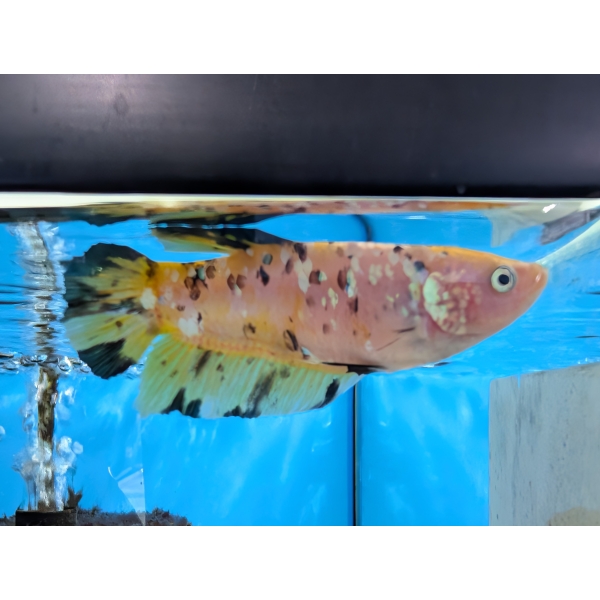
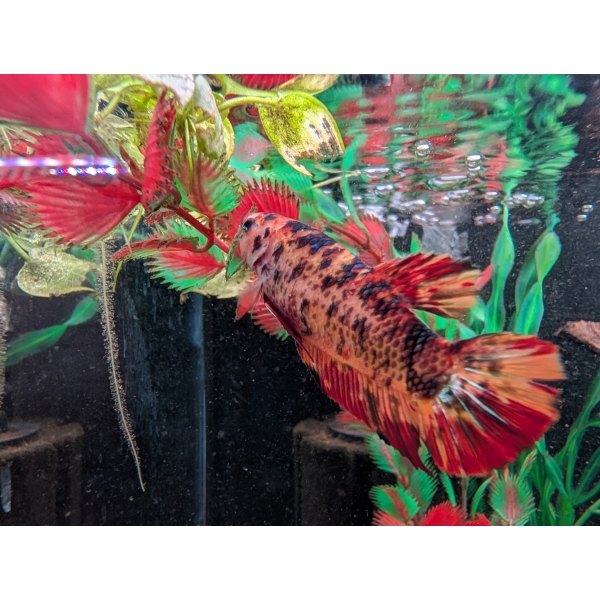
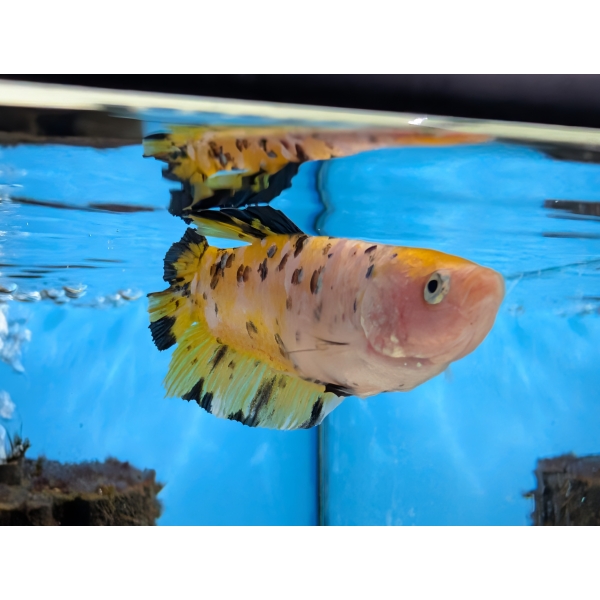
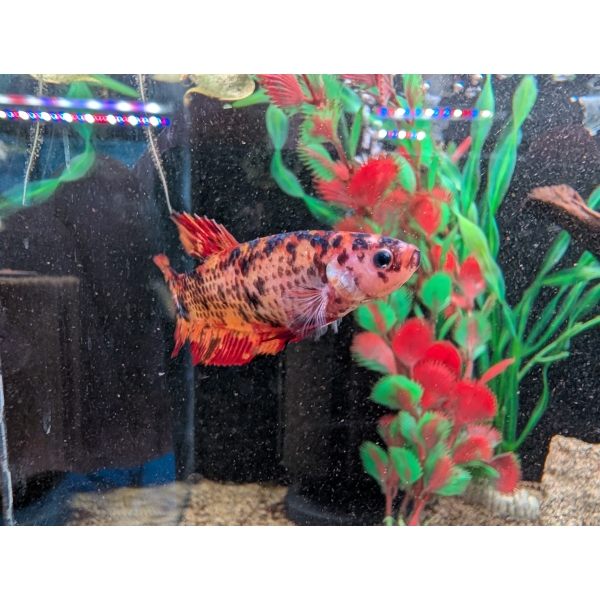
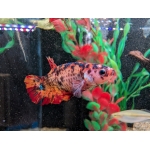
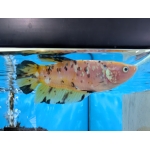
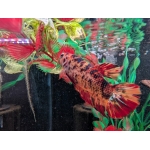
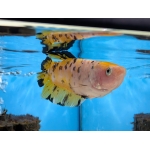


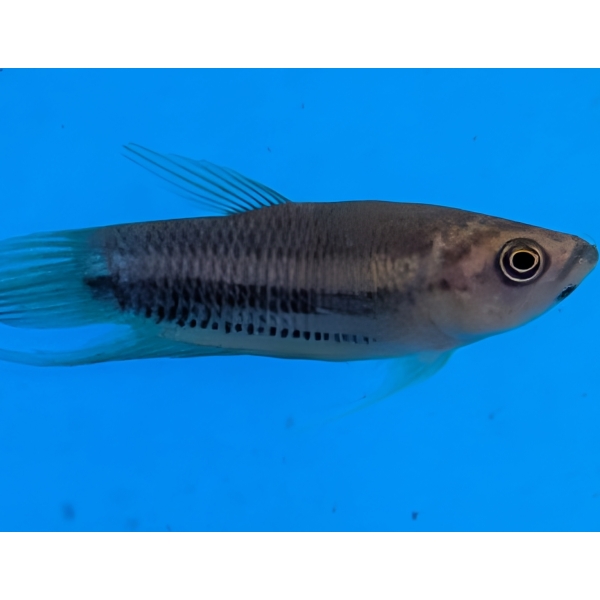
Giant Male Betta
£40.00
Giant Male Betta
- Description
- Store Policies
- Enquiries
Description
Giant Male Betta (Betta splendens “Giant” Strain)
Species Profile:
Common Names: Giant Betta, Plakat Giant, King Giant Betta (misnomer, see notes below). Scientific Name: Betta splendens (Domestic “Giant” Strain). Family: Osphronemidae (Gouramis and Bettas).
1. Introduction and Classification
The Giant Betta strain represents the largest available domestic form of the Siamese Fighting Fish (Betta splendens). Unlike the King or Prince Bettas (which are cross-strains usually reaching 6-8 cm), the true Giant Betta is a purebred Betta splendens developed through selective breeding to reach truly impressive sizes.
This strain was initially developed in Thailand in the late 1990s and is primarily sought after by advanced hobbyists for its massive size and muscular appearance. Their size necessitates specific care requirements, particularly concerning tank space and filtration.
2. Natural Habitat and Origins
While the original Betta splendens species is found in the shallow, still waters of Southeast Asia (e.g., rice paddies), the Giant Betta is a domestic strain.
-
Size: True Giants can reach an extraordinary length of 10 cm to 18 cm (4 to 7 inches), though most specimens found in the hobby mature around 10–12 cm.
-
Adaptation: Like all Bettas, they are Labyrinth Fish, meaning they possess the labyrinth organ that allows them to breathe atmospheric air from the water surface. This is vital for surviving in low-oxygen environments.
3. Appearance and Identification
Giant Bettas are primarily distinguished by their sheer bulk and length. They are substantially thicker and longer than a standard male Betta (which averages 5-6 cm).
-
Body: Exceptionally large, thick, and muscular. Their overall mass is significantly greater than any other B. splendens strain.
-
Head: Large and broad in proportion to the body.
-
Fins: Most true Giants have the Plakat (short-finned) fin type. The fins are robust and sturdy, which is necessary for moving their large bodies. Long-finned Giants are rare, as their size makes swimming extremely cumbersome.
-
Colouration: Available in a variety of colours and patterns, though they are often seen in solid metallic colours like copper, blue, or red.
4. Aquarium Requirements
Due to their considerable adult size, Giant Bettas require significantly larger housing than their standard counterparts.
-
Tank Size (Critical): A minimum tank size of 40 litres (approximately 10 imperial gallons) is recommended for a single adult Giant. Tanks of 60 litres or more are strongly preferred to allow adequate swimming space, particularly if they reach the upper end of the size range.
-
Water Temperature: 25°C – 28°C (77°F – 82°F). A reliable, powerful, and adjustable aquarium heater is essential.
-
Filtration: Due to their large body mass, Giants produce significantly more waste. Efficient filtration is mandatory. A gentle canister filter or a well-maintained sponge filter is suitable, but water flow must remain low—strong currents exhaust them quickly.
5. Water Parameters
Giants require the same pristine, stable water conditions as other Bettas, but their large waste output makes regular maintenance even more crucial.
-
pH: 6.5 – 7.2 (Slightly acidic to neutral).
-
Hardness: Soft to moderately hard water (5 – 15 dGH).
-
Maintenance: Weekly partial water changes of 30–40% are necessary to control nitrate and ammonia levels. The larger the tank, the more stable the water will be.
6. Décor and Environment
-
Substrate: Fine sand or smooth gravel.
-
Plants and Cover: Live plants (e.g., Cryptocoryne, Java Fern) are excellent for providing rest spots and security. They appreciate floating plants (like Frogbit or Amazonian water lettuce) for dimming the light and encouraging bubble nesting.
-
Hiding Places: Provide smooth, appropriately sized caves or driftwood pieces. Avoid any décor with sharp or rough edges that could injure their fins or body.
-
Surface Access: Ensure unrestricted access to the water surface for atmospheric air breathing.
7. Diet and Feeding
Giant Bettas are highly carnivorous and their large size dictates a substantial intake of high-quality protein.
-
Staple Diet: High-quality sinking Betta pellets or larger granules/mini-sticks formulated for carnivorous cichlids.
-
Supplemental Foods (Essential): Offer large, nutrient-dense frozen or live foods 3–4 times per week, such as large bloodworm, earthworm segments, and adult brine shrimp (Artemia).
-
Feeding: Feed what they can consume in 2 minutes, twice daily. Given their size, they require more food than standard Bettas, but overfeeding remains a major health risk.
8. Behaviour and Compatibility
-
Temperament: As purebred Betta splendens males, Giant Bettas are extremely territorial and highly aggressive, often more so due to their size. They must be kept singly.
-
Tank Mates: Due to their size, the increased water flow and temperature requirements, and their aggressive nature, community setups are generally not recommended. If attempted (only in very large tanks, 100L+), suitable companions are fast, robust, short-finned schooling fish that occupy the upper water column (e.g., Harlequin Rasboras).
-
Avoid: Any other Betta species, fish that nip fins, or slow-moving fish.
9. Health Considerations
Due to their selective breeding for size, Giants can sometimes have slightly shorter lifespans (3-5 years) than smaller, more natural strains.
-
Spine Issues: Rapid growth can sometimes lead to slight spinal deformities or curvature.
-
Obesity/Bloat: A severe risk due to their high metabolism and large appetites. A high-protein, low-filler diet and occasional fasting days are essential.
The best care strategy involves providing the largest possible tank, impeccable water quality, gentle current, and a high-quality carnivorous diet.
Convenient nationwide delivery; you’re only a click away!
Please put your desired delivery day in the Order Notes on the Checkout page.
General Enquiries
There are no enquiries yet.