



Lampeye Congo Tetra (Phenacogrammus aurantiacus)
£85.00
Lampeye Congo Tetra (Phenacogrammus aurantiacus).
We have 2 groups of five available
Price is 5 for £85.00
- Description
- Store Policies
- Enquiries
Description
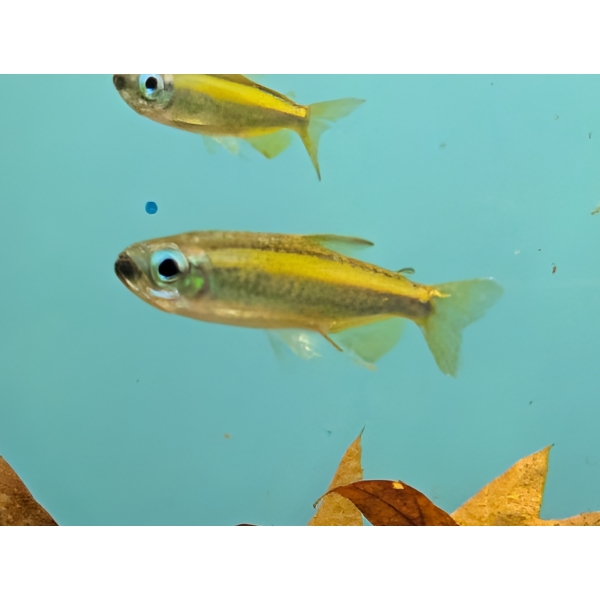
Lampeye Congo Tetra (Phenacogrammus aurantiacus)
A Comprehensive Guide:
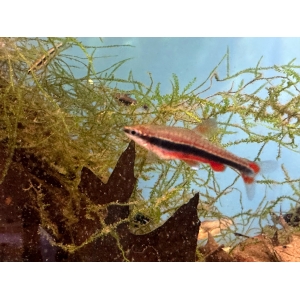
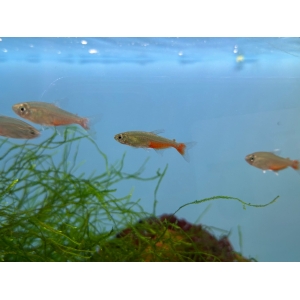
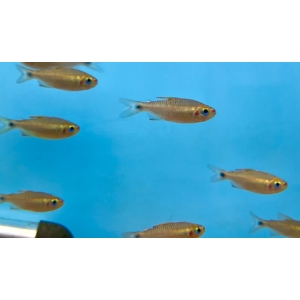
The Lampeye Congo Tetra is a peaceful characin species native to the Congo River basin in Central Africa. It gets its name from the brilliant, reflective blue or gold patch of colour above its eye, which contrasts beautifully with its generally translucent, orange-tinted body. These are schooling fish that are best kept in groups of six or more to ensure they feel secure and display their most natural behaviours.
Key Characteristics
- Appearance: This species has a slender, elongated body typical of many tetra species. The body itself is a beautiful orange-to-gold colouration, but its most striking feature is the intense, lamp-like iridescence on the upper part of its eye. They grow to a modest size of around 6 cm (2.4 inches).
- Temperament: Lampeye Congo Tetras are very peaceful and non-aggressive. They are not known to be fin-nippers, which makes them excellent companions for many other small, docile fish. They are active swimmers and will spend their time in the middle and upper levels of the aquarium.
- Lifespan: With proper care, they can live for 3 to 5 years.
Aquarium Requirements
Creating a suitable environment that mimics their natural habitat will help them thrive.
- Tank Size: A minimum tank size of 60 litres (15 gallons) is recommended for a small school. A longer tank is preferable to a taller one to give them ample swimming space.
- Water Parameters: They prefer clean, well-oxygenated water with a soft and slightly acidic to neutral pH.
- Temperature: to ( to )
- pH: to
- Hardness: Soft water, with a dH of to .
- Tank Setup: A dimly lit aquarium with a dark substrate will make their colours and “lampeye” feature really stand out. Provide plenty of live plants, such as Java Fern and Anubias, which they won’t damage. The addition of driftwood and Indian almond leaves will release tannins and create a natural blackwater environment that they love. A gentle filter flow is sufficient.
Diet and Feeding
Phenacogrammus aurantiacus are omnivores and are not fussy eaters.
- Diet: A high-quality flake or micro-pellet food should form the foundation of their diet.
- Feeding: To ensure they receive all the necessary nutrients and to encourage their best colouration, supplement their diet with live or frozen foods such as brine shrimp & daphnia.
Compatibility
Their peaceful nature makes them ideal for a community aquarium.
- Good Tank Mates: They can be housed with other small, non-aggressive species. Suitable companions include various other peaceful tetras, rasboras, dwarf cichlids (such as rams), and bottom dwellers like corydoras and kuhli loaches.
- Fish to Avoid: Avoid keeping them with larger, more boisterous or aggressive species that might intimidate them or outcompete them for food. Also, avoid housing them with fish that are large enough to see them as a potential meal.
Convenient nationwide delivery; you’re only a click away!
Please put your desired delivery day in the Order Notes on the Checkout page.
General Enquiries
There are no enquiries yet.