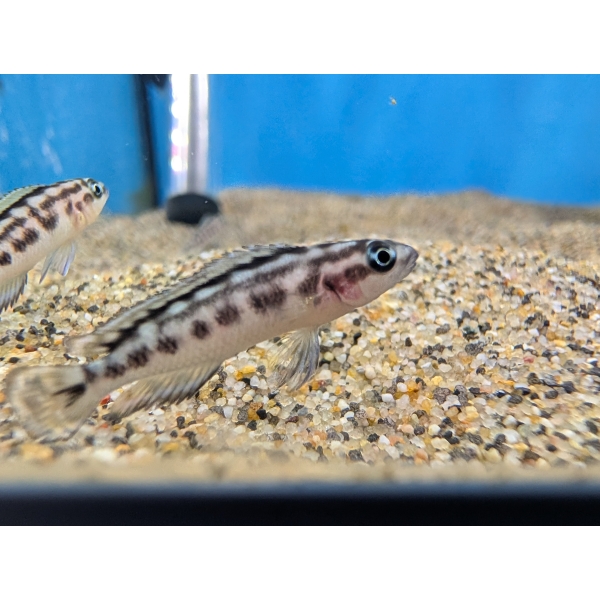
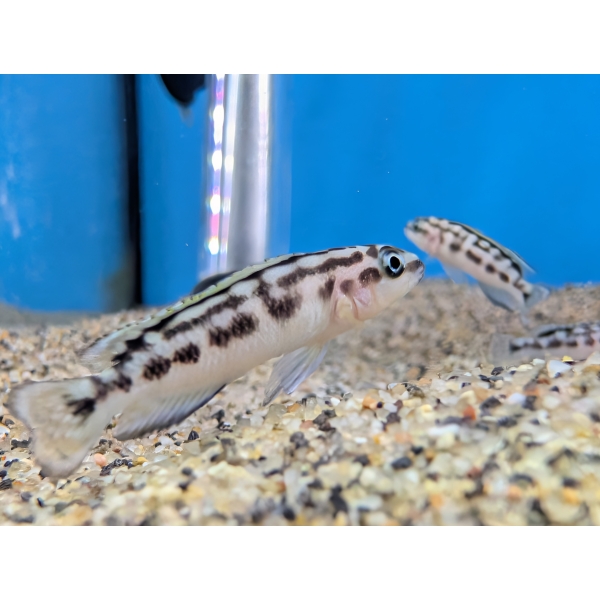


Masked Julie Julidochromis transcriptus
£12.00
Bulk Offer – 3 for £33.00
Discount will apply at checkout.
Masked Julie Julidochromis transcriptus
- Description
- Store Policies
- Enquiries
Description
Masked Julie Julidochromis transcriptus
Profile & Care Sheet
Overview
The Masked Julie, often simply called the Transcriptus, is a dwarf cichlid species endemic to Lake Tanganyika, East Africa. Known for its distinctive banded black and white pattern (resembling a transcription), it is a small, cave-dwelling fish prized by aquarists for its manageable size, interesting behaviour, and long-term monogamous pairing habits.
| Trait | Detail |
|---|---|
| Origin | Lake Tanganyika, East Africa |
| Family | Cichlidae |
| Temperament | Highly territorial and aggressive towards conspecifics, but generally peaceful with non-competing species. |
| Adult Size | 5 to 7 cm (approx 2 to 3 inches) |
| Lifespan | 8 to 10 years |
| Diet | Carnivore/Micropredator |
| Aquarium Type | Species-specific or Tanganyikan community setup. |
Water Parameters
As a Tanganyikan cichlid, the Masked Julie requires stable, hard, and alkaline water that mimics the lake’s unique chemistry.
| Parameter | Recommended Range | Notes |
|---|---|---|
| Temperature | 24C to 27C (75F to 81F) | Requires consistent, warm tropical temperatures. |
| pH | $8.0$ to $9.0$ | Highly alkaline water is essential. Buffers (e.g., crushed coral) may be needed. |
| Hardness (GH/KH) | 10 to 20 dGH / 15 to 25 dKH | Very hard water is necessary for their health and bone structure. |
| Filtration | Excellent biological and mechanical filtration. | Water must be pristine and highly oxygenated. |
| Water Changes | 20% to 30% weekly is vital. | Focus on maintaining stable parameters during changes. |
Aquarium Setup
- Tank Size: Due to their territorial nature, a minimum tank size of 80 litres (approx. 20 UK gallons) is required for a single, established breeding pair. A longer, shallow tank is preferred over a tall one, as they are substrate and rock dwellers.
- Substrate: Fine sand or very fine gravel.
- Decoration: Extensive rockwork is mandatory. The setup must include numerous caves, crevices, and hiding spots built from inert rocks (e.g., slate, limestone, ocean rock). These structures define the pair’s territory and provide spawning sites. Ensure rocks are secure and cannot be dislodged by the fish.
- Lighting: Moderate lighting is suitable.
- Water Movement: Gentle to moderate flow is acceptable.
Feeding
In the wild, J. transcriptus feeds primarily on tiny invertebrates and crustacea found among the rocky substrate. A varied, high-protein diet is necessary in the aquarium.
- Primary Diet: High-quality, sinking small cichlid pellets or granules.
- Supplements: Offer frozen or live foods regularly, such as Mysis Shrimp, Brine Shrimp, Bloodworms, and Daphnia. This encourages vibrant colouration and breeding.
- Frequency: Feed small amounts 2-3 times per day.
Behaviour & Tank Mates
- Pairing: Masked Julies form strong, monogamous pair bonds that can last for life. It is crucial to purchase a group of 4-6 juveniles and allow a pair to form naturally. Once a pair is established, all other J. transcriptus must be removed, as the pair will aggressively defend their territory against their own species.
- Temperament: They are peaceful towards most non-cichlid species and species that occupy the upper water column. They are intensely territorial, however, towards other cave-dwelling bottom fish.
- Suitable Tank Mates: Non-competing Tanganyikan species that occupy the open water, such as Cyprichromis, Paracyprichromis, or Tropheus (if space and diet allow).
- Avoid: Other Julidochromis species, shell-dwelling cichlids (e.g., Neolamprologus multifasciatus), or species that look similar in shape or pattern.
Breeding
Masked Julies are cave spawners and are known as “substrate spawners” that practise biparental care.
- Site Selection: The established pair will choose a hidden spawning site, usually a tight cave, crevice, or overturned ceramic pot.
- Spawning: The female lays a small number of non-adhesive eggs (20 to 50) on the roof or walls of the chosen cave.
- Parental Care: Both parents actively guard the territory and the fry. The male usually guards the outer territory, while the female tends to the cave entrance.
- Fry Care: Fry emerge within a week and are initially tiny. They should be fed microscopic food like Infusoria or commercially prepared liquid fry food, quickly moving onto newly hatched Brine Shrimp nauplii. The parents will often tolerate the presence of their own young, even as subsequent broods are laid.
Convenient nationwide delivery; you’re only a click away!
Please put your desired delivery day in the Order Notes on the Checkout page.
General Enquiries
There are no enquiries yet.