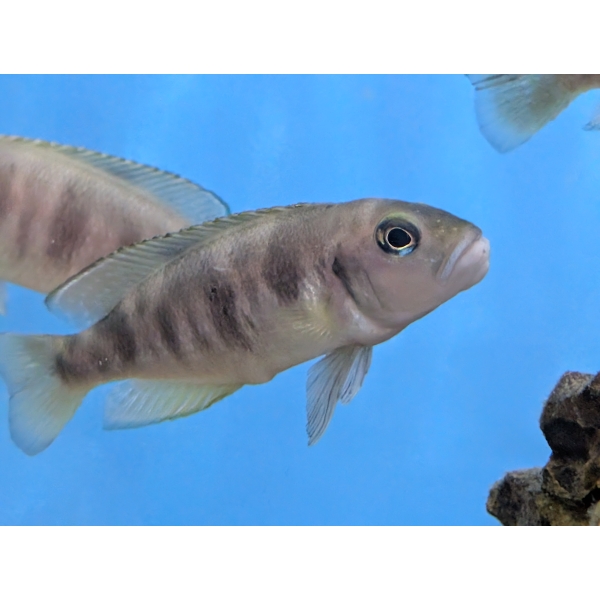

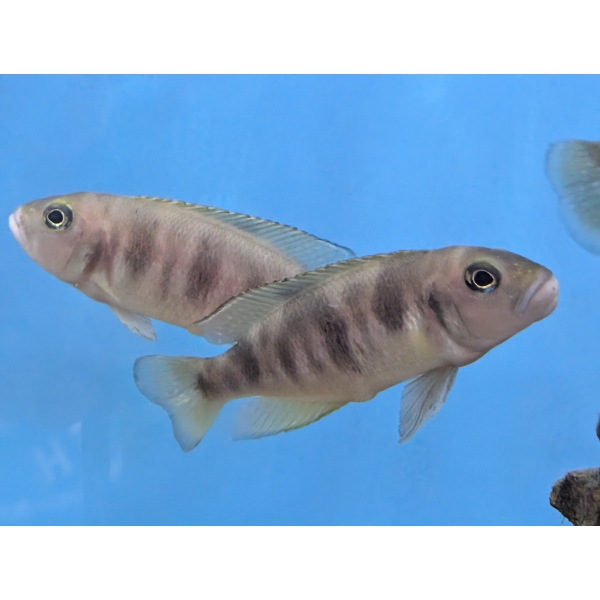


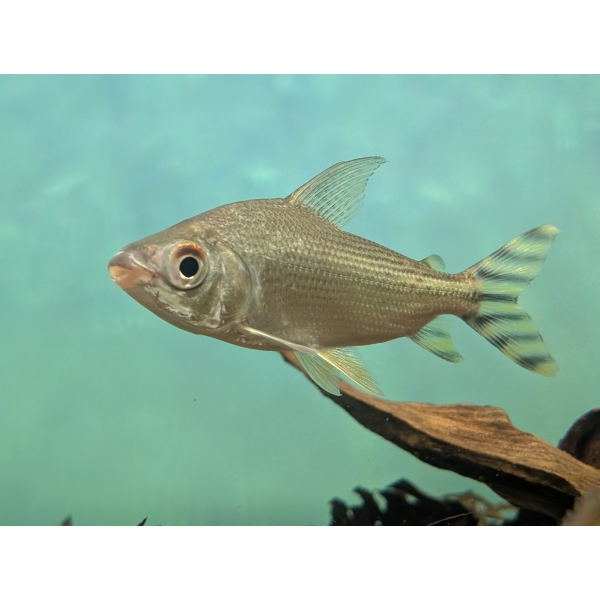
Neolamprologus boulengeri (Boulengers Shell Dweller)
£24.00
Bulk Offer – 3 for £69.00
Discount will apply at checkout.
- Description
- Store Policies
- Enquiries
Description
Boulenger’s Shell-Dweller
A Comprehensive Guide:
Boulenger’s Shell-Dweller (Neolamprologus boulengeri) is a small, highly social species of cichlid native to the sandy, shallow waters of Lake Tanganyika, Africa. They are famous for their unique behaviour of inhabiting and defending empty snail shells, which they use for shelter, breeding, and raising their fry. Despite their small size, they are incredibly territorial and possess a big personality, making them an engaging addition to a specific type of aquarium setup.
Key Characteristics
- Appearance: They are one of the smallest cichlid species, typically reaching a maximum size of only 5 cm (2 inches). Their bodies are a golden-tan or off-white colour, often with iridescent speckles, and they have large, prominent eyes (hence the name ocellatus, meaning “little eye”).
- Temperament: While small, they are extremely territorial, especially when they have claimed a shell. They are known to aggressively defend their chosen shell and the surrounding area against intruders, regardless of the intruder’s size.
- Lifespan: With proper care, they can live for up to 5 years.
Aquarium Requirements
The most crucial part of setting up a tank for Boulenger’s Shell-Dwellers is providing the right environment for their unique behaviour.
- Tank Size: A tank of 35 to 40 litres (10 gallons) is sufficient for a single pair. For multiple pairs or a small colony, a longer, wider tank of 100 litres (25 gallons) or more is highly recommended to provide ample floor space for territories.
- Water Parameters: They require stable, hard, and alkaline water to thrive.
- Temperature: to ( to )
- pH: The water must be alkaline, with a pH of to .
- Hardness: They require very hard water, with a dH (degrees of hardness) of to .
- Tank Setup: The substrate should be a deep layer of fine, soft sand. This is essential, as they will actively dig and bury their shells. The most important decoration is the snail shells themselves. Provide several shells per fish, such as those from Apple Snails or Escargot snails, with a large enough opening for the fish to enter. Arrange the shells in different areas of the tank to create distinct territories.
Diet and Feeding
In their natural habitat, Boulenger’s Shell-Dwellers are omnivores, feeding on small invertebrates found in the sand.
- Diet: A varied diet is crucial for their health and colouration. A high-quality small cichlid pellet or flake food should be the staple.
- Feeding: Supplement this with live or frozen foods such as brine shrimp or daphnia. This will help to condition the fish for breeding and provide them with necessary protein.
Breeding and Compatibility
- Breeding: Breeding is straightforward once a pair has established a territory. The female will lay eggs inside her shell, and the male will then fertilise them from the outside. The female will guard the eggs and the resulting fry until they are free-swimming. The male will defend the surrounding territory.
- Tank Mates: Due to their territorial nature, it’s best to keep them in a species-only tank. If you must add tank mates, choose small, peaceful, open-water species from Lake Tanganyika, such as Tanganyika Lampeyes (Lamprichthys tanganicanus) or similar small, non-competitive fish that will occupy the upper water column. Avoid other shell-dwellers or bottom-dwelling species that will compete for territory.
Convenient nationwide delivery; you’re only a click away!
General Enquiries
There are no enquiries yet.