

Chindongo salousi (Salousi Cichlid)
£14.00
Bulk Offer – 3 for £33.00
Discount will apply at checkout.
- Description
- Store Policies
- Enquiries
Description
Chindongo salousi
A Comprehensive Guide:
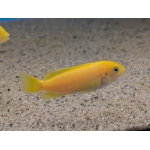
Chindongo salousi, often called the Salousi Cichlid, is a colourful and highly active species of Mbuna (rock-dwelling cichlid) endemic to Lake Malawi in Africa. They are renowned for their sexual dimorphism: adult males display a striking pattern of vivid blue with vertical black bars, while females and subdominant males are a contrasting brilliant yellow. This colour difference makes a male and female pair, or a single male with several females, a beautiful sight in any aquarium.
Key Characteristics
- Appearance: Adult males are bright blue with five to six dark vertical bars and egg spots on their anal fin. Females and juveniles are a vibrant, solid yellow, occasionally with faint barring. They typically reach a maximum size of 10 cm (4 inches).
- Temperament: Like most Mbuna, C. salousi are territorial and can be aggressive, especially the males. They will fiercely defend their chosen rocky territory. It is best to keep one male with several females to disperse aggression and prevent any single female from being overly harassed.
- Lifespan: With proper care in a well-maintained tank, they can live for 8 to 10 years.
Aquarium Requirements
A proper aquarium setup is crucial for the health and happiness of the Salousi Cichlid.
- Tank Size: A minimum tank size of 200 litres (55 gallons) is recommended for a small group. Larger tanks are always better, as they provide more space for territories and help to reduce overall aggression.
- Water Parameters: Salousi Cichlids require stable, hard, and alkaline water, mirroring their native lake environment.
- Temperature: to ( to )
- pH: The water must be alkaline, with a pH of to .
- Hardness: They need hard water, with a dH (degrees of hardness) of to .
- Tank Setup: The tank should be decorated to resemble a rocky lakebed. Use an inert, fine sand substrate and create numerous rock formations with plenty of caves and crevices. These rock piles serve as a natural landscape, offering territories for the fish and a visual barrier to break up lines of sight, which is crucial for reducing aggression.
Diet and Feeding
In their natural habitat, C. salousi are herbivores, feeding on the algae and small organisms that grow on rocks.
- Diet: Their primary diet should be vegetable-based. A high-quality spirulina flake or pellet food is an excellent choice.
- Feeding: To supplement their diet, offer blanched vegetables such as spinach, broccoli, or courgette. Avoid feeding them protein-rich foods like bloodworms or beef heart, as these are difficult for them to digest and can lead to serious health issues like Malawi bloat.
Breeding and Compatibility
- Breeding: The Salousi Cichlid is a maternal mouthbrooder. The male will show off his vibrant blue colour and display his egg spots to a female. The female will then lay her eggs and immediately take them into her mouth. She will hold the eggs for approximately three weeks before releasing free-swimming fry.
- Tank Mates: They can be housed with other Mbuna of a similar size and temperament. Good tank mates include Iodotropheus sprengerae and certain species of Labidochromis or Cynotilapia. Avoid mixing them with more docile fish or cichlids that are significantly larger or more aggressive. It is also wise to avoid other blue Mbuna males to prevent territorial conflicts.
Convenient nationwide delivery; you’re only a click away!
General Enquiries
There are no enquiries yet.