

Pseudotropheus flavus Dinghani Cichlid
£14.00
Bulk Offer – 3 for £39.00
Discount will apply at checkout.
- Description
- Store Policies
- Enquiries
Description
Pseudotropheus flavus
A Comprehensive Guide:
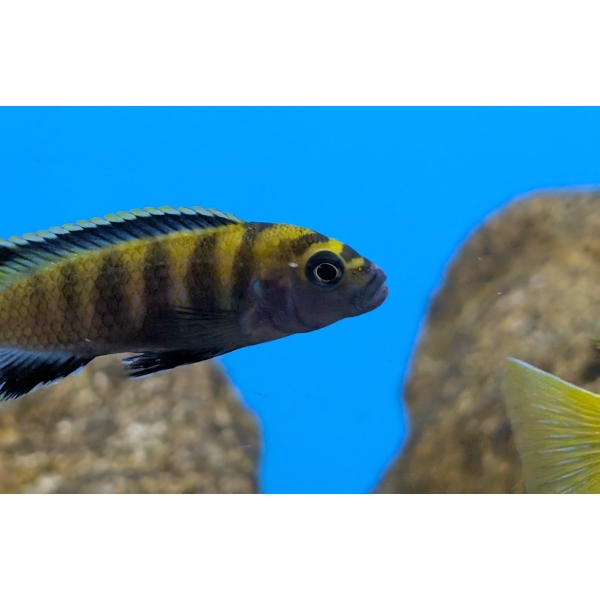
Pseudotropheus flavus, or Dinghani Cichlid, is a highly prized species of Mbuna (rock-dwelling cichlid) originating from the rocky shores of Lake Malawi, Africa. They are particularly sought after for their striking appearance: males display a vivid yellow body with four to five vertical black bars, while females and juveniles are a more muted brown or tan with less prominent barring. Males also develop a distinct egg spot on their anal fin, a key feature in their breeding behaviour.
Key Characteristics
- Appearance: Males are brilliant yellow with bold black vertical stripes. Females are typically a duller brown or grey, though some exhibit a pale yellow colour. Both sexes grow to around 10 cm (4 inches).
- Temperament: Like most Mbuna, the Dinghani Cichlid is territorial and assertive. Males can be particularly aggressive towards other males of their own species and similar-looking fish. It is best to keep only one male per tank unless the aquarium is very large and provides ample hiding places.
- Lifespan: With proper care, they can live for 8 to 10 years.
Aquarium Requirements
A well-planned aquarium setup is vital for the health and well-being of the Dinghani Cichlid.
- Tank Size: A tank of at least 200 litres (55 gallons) is recommended for a small group (e.g., one male with several females). Larger tanks are always better, as they help to diffuse aggression.
- Water Parameters: As with all Lake Malawi cichlids, stable and specific water conditions are essential.
- Temperature: to ( to )
- pH: The water must be alkaline, with a pH of to .
- Hardness: They require hard water, with a dH (degrees of hardness) of to .
- Tank Setup: The aquarium should mimic their natural rocky habitat. Use an inert substrate like aragonite or crushed coral to help buffer the water and maintain the high pH. The most important element is rockwork. Create plenty of caves, crevices, and hiding spots from rocks stacked to the surface. This provides territories for the fish and visual breaks to reduce aggression.
Diet and Feeding
P. flavus are primarily herbivores in the wild, feeding on algae growing on the rocks (Aufwuchs).
- Diet: Their diet should be rich in vegetable matter. A high-quality spirulina-based cichlid flake or pellet food is an excellent staple.
- Feeding: Supplement their diet with blanched vegetables like spinach or courgette. Avoid feeding them high-protein foods like bloodworms or beef heart, as this can lead to digestive issues and bloat.
Breeding and Compatibility
- Breeding: Dinghani Cichlids are maternal mouthbrooders. The male will perform a vigorous courtship display to entice a female, who then lays eggs and immediately takes them into her mouth. She will hold the eggs for about 21 days until the fry are free-swimming. The male’s egg spot serves as a decoy, which the female nips at, stimulating her to take in the sperm to fertilise the eggs.
- Tank Mates: The best tank mates are other Malawian cichlids of a similar size and temperament. Good choices include other Mbuna species such as Melanochromis, Labidochromis, and Iodotropheus. Avoid keeping them with peaceful or overly timid species that might be bullied.
Convenient nationwide delivery; you’re only a click away!
General Enquiries
There are no enquiries yet.