
Santa Maria Endler Poecilia wingei
£10.00
Price is per Pair £10.00
- Description
- Store Policies
- Enquiries
Description
Poecilia wingei ‘Santa Maria’:
A Comprehensive Overview
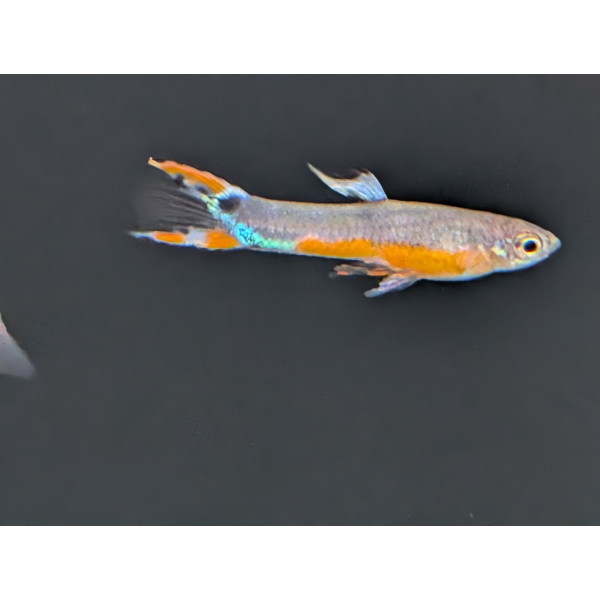
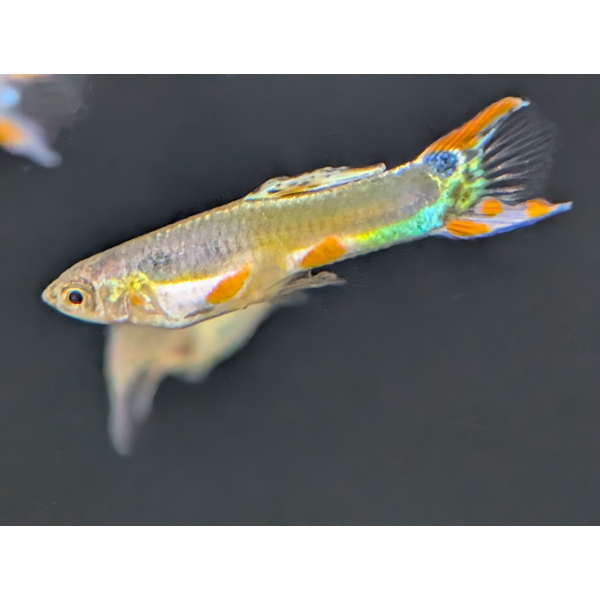
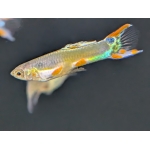
Poecilia wingei ‘Santa Maria’, commonly known as the Santa Maria Endler or Santa Maria Endler’s Livebearer, is a captivating and highly sought-after strain of Endler’s Livebearer. While the wild species (Poecilia wingei) is native to specific lagoons and streams in Venezuela, the ‘Santa Maria’ is a selectively bred variant admired for its unique and intricate colour patterns, particularly a distinctive sword-like extension on the caudal fin and vibrant metallic hues. Its peaceful nature, small size, and continuous activity make it an excellent choice for nano and community aquariums.
Taxonomy and Classification
- Kingdom: Animalia
- Phylum: Chordata
- Class: Actinopterygii
- Order: Cyprinodontiformes
- Family: Poeciliidae (Livebearers)
- Genus: Poecilia
- Species: Poecilia wingei (‘Santa Maria’ is a cultivated strain)
The Endler’s Livebearer was initially thought to be a subspecies of the Guppy (Poecilia reticulata) but was later recognised as a distinct species, Poecilia wingei. The ‘Santa Maria’ is one of many popular line-bred strains, known for its specific fin and colour patterns.
Habitat and Distribution
While the ‘Santa Maria’ strain is captive-bred, its wild ancestors, Poecilia wingei, are endemic to the Laguna de Patos and other associated lagoons and streams in northeastern Venezuela. These natural habitats typically consist of warm, clear to slightly brackish waters, often with dense vegetation, algae, and detritus. The water parameters are generally hard and alkaline, with temperatures ranging from 24-30°C (75-86°F).
Physical Characteristics
The Santa Maria Endler is a very small fish, with males typically reaching only 2-3 cm (0.8-1.2 inches) in total length, and females slightly larger at 3-4 cm (1.2-1.6 inches). Its most distinctive features are the male’s vibrant and complex colouration and finnage.
Key physical characteristics include:
- Body Shape: Slender and elongated, with a small, streamlined body.
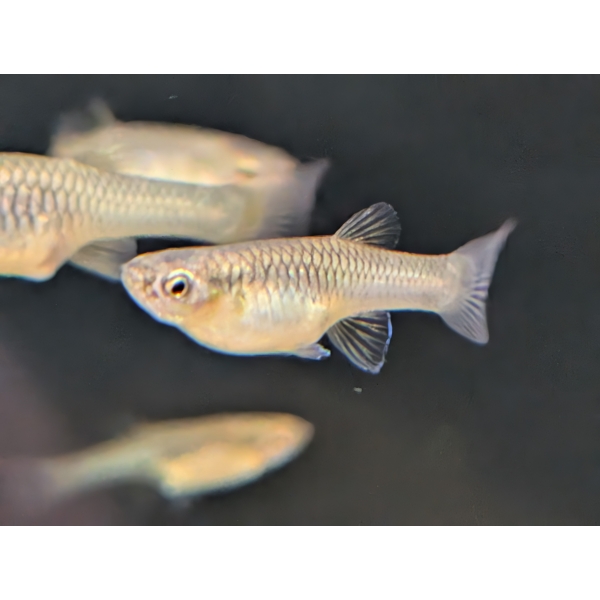
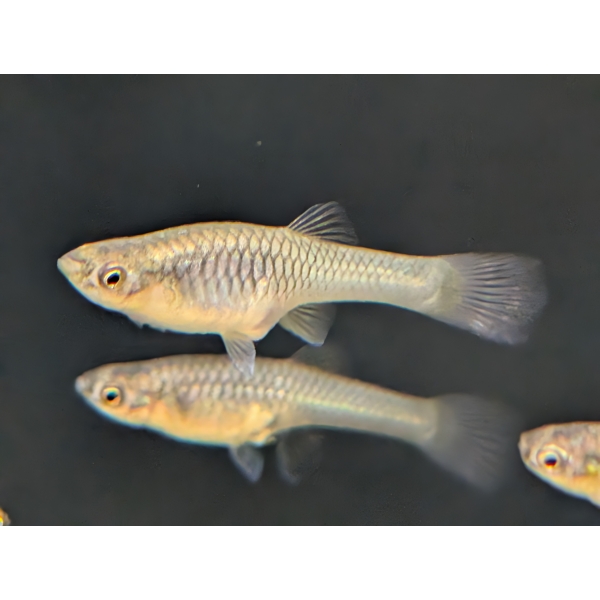
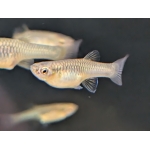
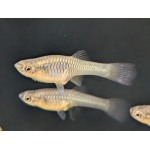
- Colouration: Males display an incredible array of iridescent metallic colours, including greens, blues, oranges, and black. The ‘Santa Maria’ strain is specifically characterised by a prominent red or orange sword-like extension on the lower lobe of the caudal fin, often accompanied by black markings and vibrant iridescent spots on the body. Females are typically larger and have a more subdued, silvery or yellowish-grey body with little to no colouration.
- Fins: Males exhibit elaborate finnage, with the caudal fin being particularly distinctive due to its “sword” extension.
- Eyes: Relatively large.
Diet and Feeding
In its natural habitat, Poecilia wingei is an omnivore, feeding on small invertebrates, insect larvae, algae, and detritus. In an aquarium setting, Santa Maria Endlers are unfussy eaters and will readily accept a variety of high-quality, small-sized foods.
Suitable foods include:
- High-Quality Flake Food: Finely crushed flake food should form the staple of their diet.
- Micro-Pellets: Small micro-pellets designed for nano fish.
- Frozen Foods: Frozen baby brine shrimp, daphnia, and microworms are excellent protein supplements and eagerly accepted.
- Live Foods: Live daphnia, microworms, and newly hatched brine shrimp are eagerly accepted and can significantly enhance their colouration and condition.
Due to their small mouths and constant activity, feed small amounts multiple times a day.
Behaviour and Temperament
The Santa Maria Endler is a peaceful, active, and highly social schooling fish. They thrive when kept in groups of at least 6-8 individuals, and ideally more. Keeping them in larger groups encourages their natural shoaling behaviour, reduces stress, and allows males to display their full colour potential as they interact. They are constantly active, darting around the tank, making them a joy to watch. They are an excellent choice for nano aquariums and community tanks with other very small, equally peaceful species. Males are generally non-aggressive towards each other, making them suitable for mixed-sex groups.
Reproduction
As livebearers, Santa Maria Endlers are incredibly prolific and easy to breed in captivity. They give birth to live, free-swimming fry.
- Gestation: Females typically give birth every 23-30 days.
- Brood Size: Brood sizes can vary from 5 to 25 fry, depending on the female’s size and age.
- Parental Care: There is no parental care after birth; adults may predate on their own fry, especially if the tank is not heavily planted.
- Fry Care: Fry are relatively large and can be fed newly hatched brine shrimp, finely crushed flake food, or powdered spirulina from birth. Heavy planting (e.g., Java Moss, floating plants) provides excellent cover for fry survival.
Conservation Status
As a selectively bred aquarium strain, the Santa Maria Endler does not have a wild conservation status. Its wild counterpart, Poecilia wingei, is listed as “Critically Endangered” by the IUCN Red List due to severe habitat degradation and loss in its native Venezuela, primarily from pollution and urban development. Captive breeding of Endler’s Livebearers is crucial for their continued existence and popularity in the hobby.
Aquarium Care
For aquarists interested in keeping Santa Maria Endlers, here are some essential care guidelines:
- Tank Size: A minimum of 20 litres (5 gallons) for a small group (6-8 fish). Larger tanks are always beneficial for stability and to accommodate their active nature.
- Water Parameters:
- Temperature: 24-30°C (75-86°F)
- pH: 7.0-8.0 (neutral to alkaline)
- Hardness: 10-20 dGH (moderately hard to hard) – they thrive in harder water.
- Filtration: Gentle filtration is crucial; sponge filters or small hang-on-back filters with a low flow rate are ideal. Strong currents should be avoided.
- Decor: Provide plenty of dense live plants (e.g., Java Moss, Hornwort, Anubias, floating plants), driftwood, and rocks to offer hiding spots and visual breaks.
- Substrate: Fine gravel or sand is suitable.
- Lighting: Moderate lighting is generally suitable, which will enhance their vibrant colours.
- Tank Mates: Excellent tank mates include other very small, peaceful fish such as micro-rasboras, small tetras (e.g., Ember Tetras), dwarf corydoras, and otocinclus catfish. Avoid housing them with large, aggressive, or fin-nipping species.
- Maintenance: Regular weekly water changes (20-30%) are crucial for maintaining pristine water quality, which is vital for their health and vibrant colouration.
By providing a stable, well-maintained environment with appropriate water parameters and a varied diet, the Santa Maria Endler can be a beautiful, active, and endlessly fascinating addition to a freshwater aquarium.
Convenient nationwide delivery; you’re only a click away!
General Enquiries
There are no enquiries yet.