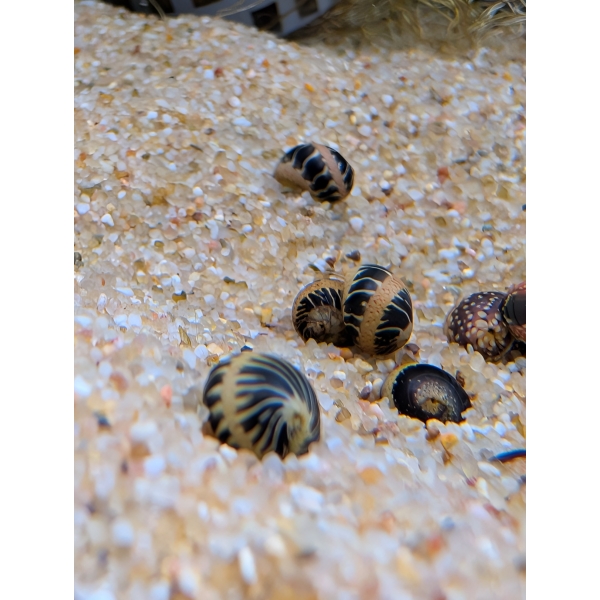

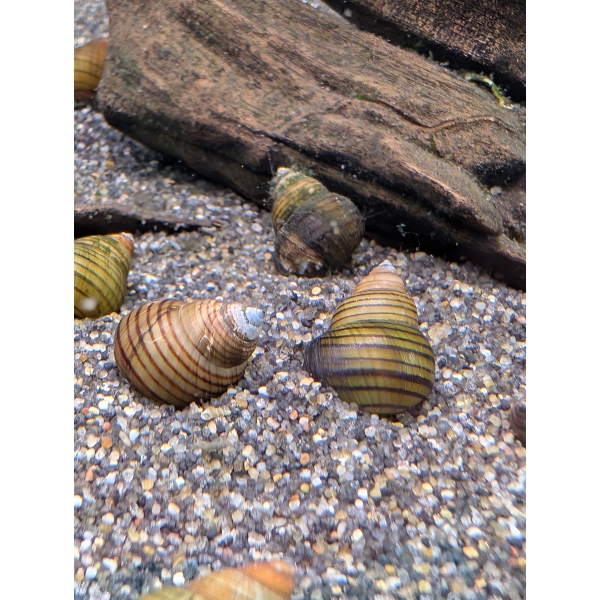

Striped Pumpkin Snail Clithon sowerianum
£4.00
Bulk Offer – 3 for £10.00
Discount will apply at checkout.
- Description
- Store Policies
- Enquiries
Description
Striped Pumpkin Nerite Snail (Clithon sowerbianum / Vittina sp.)
The Striped Pumpkin Nerite Snail is a captivating and highly beneficial freshwater and brackish water invertebrate, often referring to species like Clithon sowerbianum or certain Vittina species with prominent striped patterns on a pumpkin-orange to yellowish background. These snails are prized in the aquarium hobby for their striking aesthetics and their exceptional ability to control algae.
Origin and Habitat
Striped Pumpkin Nerite Snails, similar to other Nerite species, originate from the coastal regions and estuaries of Southeast Asia and the Indo-Pacific. Their natural habitats include slow-moving rivers, streams, and mangrove areas, where they can be found clinging to rocks, driftwood, and submerged vegetation. They are adaptable to a range of salinities, from pure freshwater to brackish and even marine environments.
Appearance and Characteristics
These small snails typically reach a size of about 0.5 to 1.2 inches (1 to 3 cm) in shell diameter, depending on the specific species. Their most defining feature is their highly variable shell coloration and patterning. The base color ranges from vibrant orange, red, or yellow, overlaid with distinct black, brown, or dark stripes, bands, or intricate zigzag patterns. Some individuals, particularly within the Clithon genus, may even possess small “horns” or protrusions on their shells.
Like other Nerite snails, they have a strong, muscular foot that allows them to adhere firmly to surfaces, even in areas with moderate water flow. They also possess an operculum, a hard plate used to seal their shell for protection.
Behavior and Temperament
Striped Pumpkin Nerite Snails are peaceful, non-aggressive, and incredibly industrious. They are renowned as one of the most efficient algae eaters in the aquarium hobby, constantly grazing on various types of algae and biofilm that accumulate on glass, rocks, driftwood, and plant leaves. Their continuous movement helps keep surfaces clean and prevents excessive algae buildup.
They are completely safe for planted aquariums as they do not consume healthy live plants, preferring decaying plant matter and nuisance algae. Like other Nerite snails, they are known for their ability to climb above the waterline, especially if water quality is poor or food sources are scarce. Therefore, a tight-fitting lid on the aquarium is crucial to prevent escapes.
Aquarium Requirements
To ensure the health and activity of Striped Pumpkin Nerite Snails, consider the following aquarium parameters:
- Tank Size: A minimum of 5 gallons (19 liters) is suitable for a few snails, but larger tanks (10+ gallons) are recommended to provide ample grazing surfaces and maintain stable water parameters.
- Water Parameters:
- Temperature: 22-25c
- pH: 7.0-8.5 (slightly alkaline to alkaline water is crucial for shell health; acidic water can lead to shell erosion).
- Hardness: 8-18 dGH (moderately hard to hard water is highly recommended for calcium availability; consider adding calcium supplements if water is soft).
- Salinity: While they thrive in freshwater, a slightly brackish environment (specific gravity of 1.001-1.005) can enhance their longevity and vibrancy, mimicking their natural estuarine habitats.
- Filtration: Good filtration is essential to maintain clean water, but ensure the water flow is not overly turbulent. Sponge filters or filters with covered intakes are recommended to prevent the snail from being drawn in.
- Substrate: Any substrate is suitable, but smooth rocks, pebbles, and driftwood are highly beneficial as they provide ample surfaces for grazing.
- Lighting: Moderate lighting is appropriate, as it encourages the growth of algae and biofilm, their primary food sources.
- Decor: Provide plenty of smooth rocks, driftwood, and robust live plants (e.g., Anubias, Java Fern). These offer grazing areas, hiding spots, and visual interest. Always ensure a tight-fitting lid.
Diet
Striped Pumpkin Nerite Snails are primarily herbivorous grazers. While they are excellent at consuming natural algae, their diet should be supplemented, especially in tanks with limited algae growth.
- Primary Diet: Biofilm, diatoms, green spot algae, and other nuisance algae.
- Supplements: High-quality sinking algae wafers, spirulina flakes, and blanched vegetables (e.g., zucchini, cucumber, spinach, kale).
- Calcium Source: Calcium is vital for strong shell growth. If your water is soft, supplement with cuttlebone (sold for birds), calcium carbonate powder, or specialized snail foods rich in calcium.
It is important not to over-clean the tank’s surfaces, as leaving some natural algae provides a continuous food source for these industrious snails.
Breeding
A significant advantage of Striped Pumpkin Nerite Snails in a freshwater aquarium is that they do not reproduce in freshwater. Although females will lay small, hard, white or off-white egg capsules (often referred to as “sesame seeds”) on hard surfaces within the tank, these eggs require brackish or saltwater conditions to hatch and for the larvae to develop. This characteristic ensures that you will not experience an overpopulation of snails in your freshwater aquarium.
Common Health Issues
Striped Pumpkin Nerite Snails are generally hardy when kept in appropriate water conditions. The most common health concern is shell erosion, which occurs in soft or acidic water due to insufficient calcium. This can manifest as thinning, pitting, or holes in the shell, making the snail vulnerable to infections. Maintaining stable, hard, and alkaline water parameters with adequate calcium supplementation is the best preventative measure. They are also highly sensitive to copper, so it is crucial to avoid any medications containing copper in tanks housing these snails.
Conclusion
The Striped Pumpkin Nerite Snail is a highly beneficial and visually appealing addition to almost any freshwater or brackish aquarium. Their vibrant colouration, diligent algae-eating habits, and inability to overpopulate a freshwater tank make them an ideal choice for aquarists seeking an effective and beautiful clean-up crew that also adds a unique aesthetic to their aquatic setup.
Convenient nationwide delivery; you’re only a click away!
General Enquiries
There are no enquiries yet.