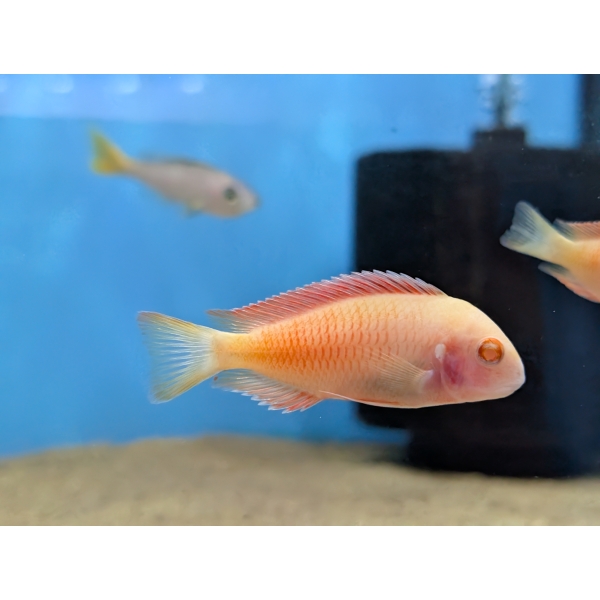


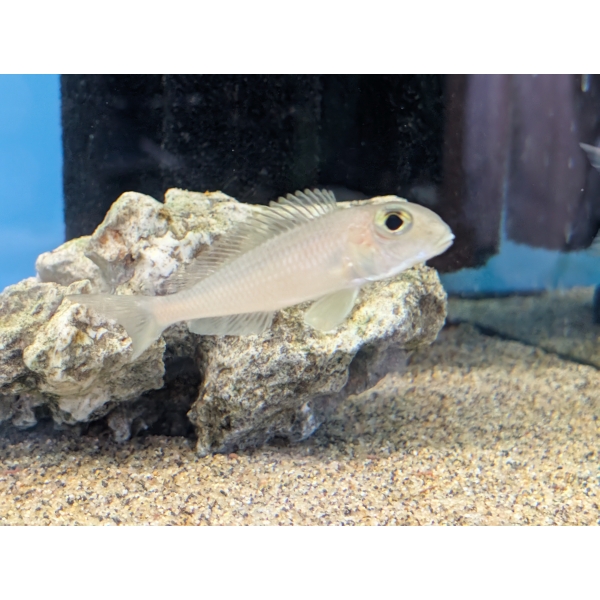
Tropheus moori “Chipimbi Albino”
£250.00
These fish will only be sold as a group of 8
- Description
- Store Policies
- Enquiries
Description
‘Chipimbi Albino’ Tropheus (Tropheus moori)
A Comprehensive Care Guide:
The “Chipimbi Albino” is a highly sought-after and visually stunning colour morph of Tropheus moori, a species of cichlid native to Lake Tanganyika in East Africa. While all Tropheus species are known for their demanding care and aggressive nature, the beauty of this albino variant is undeniable. This guide will cover the specific requirements for successfully keeping this active, herbivorous cichlid, from its unique diet to the essential environmental conditions needed to manage its social behaviour.
Taxonomy and Classification
- Kingdom: Animalia
- Phylum: Chordata
- Class: Actinopterygii
- Order: Cichliformes
- Family: Cichlidae
- Genus: Tropheus
- Species: moori
The name “Chipimbi Albino” refers to a specific geographic population of Tropheus moori from the Chipimbi region of Lake Tanganyika that displays a recessive albino genetic trait. This is a colour morph, not a separate subspecies.
Habitat and Distribution
The standard Tropheus moori is found throughout Lake Tanganyika, but the “Chipimbi” population is specific to the rocky shores of the Chipimbi area. They inhabit the shallow, rocky littoral zone where they spend their time grazing on the aufwuchs—a layer of algae and microorganisms that grows on the rocks. Their habitat is characterised by exceptionally clear, hard, and alkaline water.
Physical Characteristics
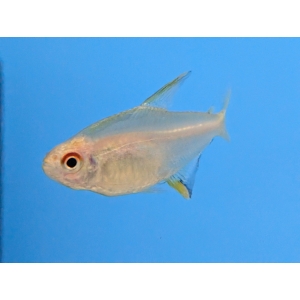
The “Chipimbi Albino” is instantly recognisable due to its lack of normal dark pigment.
- Colouration: Instead of the typical dark body, this fish has a stunning silvery-white to pale yellow body with a distinct albino feature: pink or reddish eyes. When they are juvenile, they often display a more vibrant yellow or orange hue.
- Body Shape: Like all Tropheus, it has a robust, deep body with a down-turned mouth, which is perfectly adapted for scraping algae from rocky surfaces.
- Size: It typically reaches an adult size of 10–13 centimetres (4–5 inches).
Diet and Feeding
The diet is one of the most critical aspects of keeping Tropheus successfully. They are herbivores and are not built to process animal protein.
- Staple Diet: The foundation of their diet must be a high-quality, spirulina-based flake or pellet food. This should make up the majority of their food intake.
- Supplements: Occasionally, you can supplement with a small amount of blanched vegetables like spinach or courgette.
- Avoid: Never feed them protein-rich foods such as bloodworms, brine shrimp, or beef heart. Doing so can cause a fatal digestive condition known as “Tropheus bloat.” They should also be fed in small amounts multiple times a day rather than one large meal.
Behaviour and Temperament
Tropheus are known for being one of the most aggressive and territorial cichlids in the hobby. This is not a fish for a community tank.
- Shoaling Fish: They must be kept in a large group or shoal, ideally with 15 or more individuals. Keeping a large group helps to diffuse aggression, as it prevents one fish from being singled out and relentlessly bullied. A large group will create a complex pecking order, which is far more stable than a small group.
- Territoriality: Males, and even females, will establish and defend territories, especially breeding territories. It is crucial to have a spacious tank with an abundance of rockwork to break up lines of sight.
- Tank Mates: The best tank mates for a Tropheus group are other similar-sized, robust Tropheus species. Keeping them with other Tanganyikan cichlids is possible but requires careful planning and a very large tank.
Aquarium Care
Recreating the hard, alkaline water of Lake Tanganyika is non-negotiable for the health of this species.
- Tank Size: Due to their aggression and shoaling behaviour, a minimum tank size of 400 litres (100 US gallons) is essential for a small group. Larger is always better.
- Water Parameters:
- Temperature: 24–26°C (75–79°F).
- pH: 8.0–9.0. This high pH is absolutely critical. Use a crushed coral substrate or commercial buffers to maintain it.
- Hardness: 10-20 dGH (hard to very hard water).
- Filtration: Powerful, over-rated filtration is a must to keep the water clean and well-oxygenated. A large canister filter is recommended.
- Decor: The tank must be dominated by rockwork. Create numerous caves, overhangs, and hiding places to simulate their natural environment and provide territories for individual fish. Avoid plastic plants or decor they could easily ingest.
- Maintenance: A large, weekly water change of 30-50% is vital to prevent nitrate build-up and maintain stable water parameters.
While challenging, successfully keeping a shoal of “Chipimbi Albino” Tropheus is one of the most rewarding experiences in the cichlid hobby.
Convenient nationwide delivery; you’re only a click away!
General Enquiries
There are no enquiries yet.