
African Moon Tetra
£15.00
African Moon Tetra
Bulk Offer – 6 for £85.00
Discount will apply at checkout.
- Description
- Store Policies
- Enquiries
Description
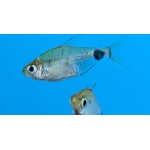
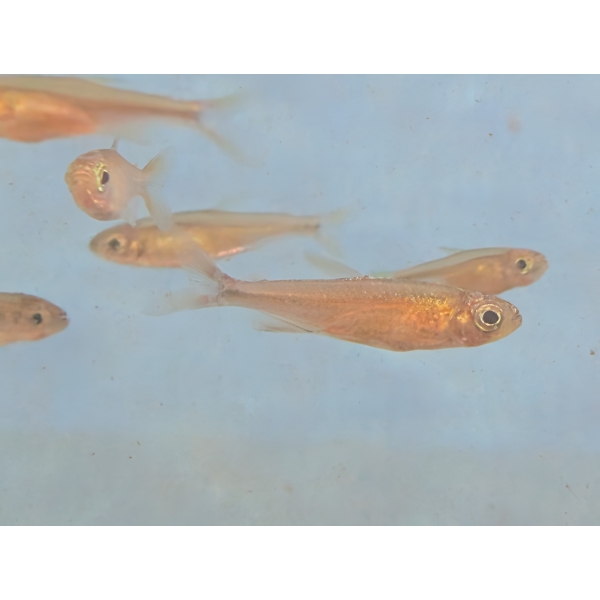
Bathyaethiops breuseghemi: African Moon Tetra
Care Guide
Common Names: , , Scientific Name: Bathyaethiops breuseghemi Family: (African ) Origin: West-Central Africa (Congo River basin, Democratic Republic of Congo).
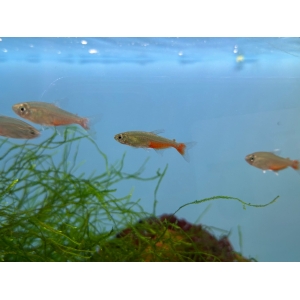
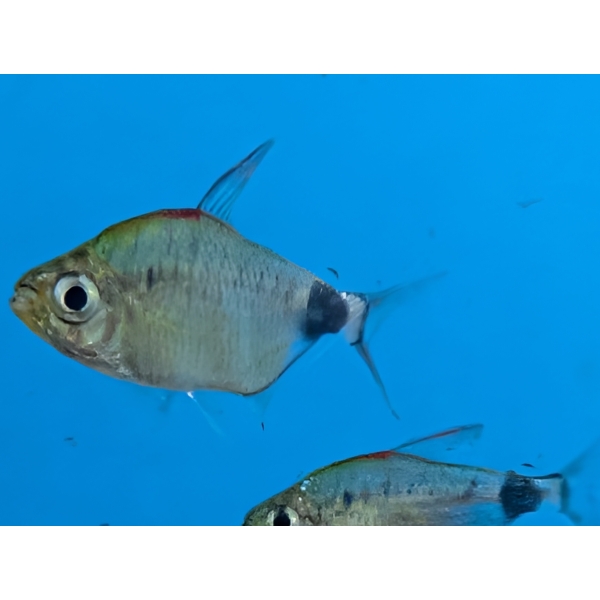
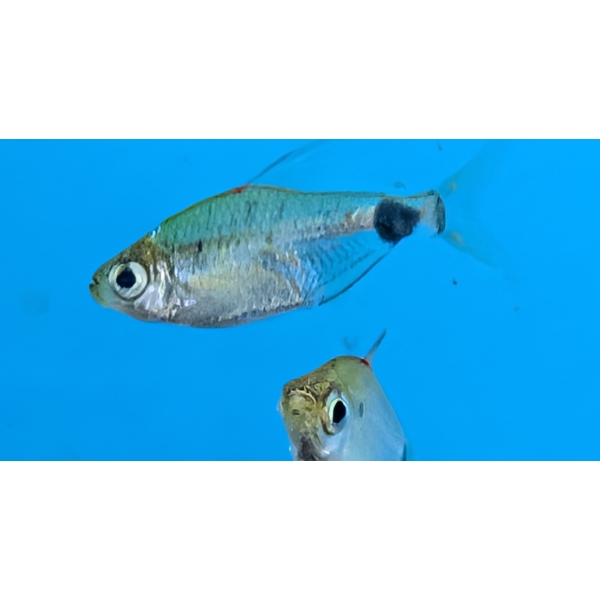
Bathyaethiops breuseghemi is a vibrant, energetic, and peaceful schooling fish. It is highly valued in the aquarium hobby for its shimmering silver body and the distinctive and present in its fins, particularly when males are displaying. This is a durable species that thrives in well-maintained, spacious community aquariums.
Key Characteristics and Temperament
- Size: They typically reach a maximum length of (approximately 3 inches).
- Appearance: They possess a sleek, -shaped body with highly reflective, silver scales. The fins are often a translucent , deepening to or even at the base of the caudal and anal fins when the fish are in peak condition. Unlike some relatives, it lacks a prominent spot at the tail’s base.
- Temperament: Highly peaceful and sociable. They are constant, fast swimmers and must be kept in a group to prevent shyness and stress. They are excellent community fish and will not usually bother smaller species or nip fins.
- Activity: Diurnal, occupying the mid-to-upper water columns, where they school tightly, particularly during feeding or when startled.
Aquarium Setup and Environment
Due to their active schooling , tank size is the most critical factor for their long-term health and .
Tank Size and Group Structure
- Minimum Tank Size: A tank of at least () is the minimum to provide adequate swimming lanes for a school. Longer, rectangular tanks are always better than tall ones.
- School Size: A minimum school of 6 to 8 individuals is mandatory. Larger groups of or more are highly recommended to their natural schooling and reduce individual stress.
Substrate and Décor
- Substrate: A dark sand or fine, dark gravel substrate is preferred, as this brings out the metallic shimmer and fin of the fish.
- Layout: The design should prioritise a large, open swimming area in the centre.
- Plants and : Use dense planting along the back and sides of the tank with robust species like or . and smooth river stones can provide natural and resting spots.
- Lighting: Moderate to subdued lighting is best. Floating plants, such as , are excellent for diffusing bright light and making the fish feel secure.
Water Parameters
This species prefers soft, slightly acidic water, typical of the rivers in the Congo basin. Stability is key; ensure excellent water quality via rigorous filtration and maintenance.
| Parameter | Recommended Range |
|---|---|
| Temperature | to ( to ) |
| to (Soft and slightly acidic is optimal) | |
| Hardness () | Soft to Medium () |
Filtration and Water Flow
- Filtration: A high-quality (canister or hang-on-back) providing strong and is essential.
- Water Flow: They originate from flowing water environments and appreciate a to within the aquarium. Ensure the filter outlet creates movement across the tank.
- Maintenance: Weekly water changes of to are crucial for removing nitrates and maintaining high water quality.
Diet and Tank Mates
Dietary Needs
Bathyaethiops breuseghemi is a primarily and requires a varied, high-protein diet to fuel its active lifestyle and maintain vibrant .
- Staple: A high-quality, small, sinking pellet or flake food formulated for tropical fish should be fed daily.
- Protein Enrichment: Supplement the staple diet several times a week with or . Excellent choices include , , and .
- Variety: Ensure the diet includes some vegetable matter, either as part of the staple pellet or via occasional offerings of blanched .
Compatibility
They are exemplary community fish and can be housed with almost any peaceful species that occupies a different part of the water column.
- Suitable Tank Mates: , (such as or ), other (like the ), peaceful , and certain non-aggressive .
- Incompatible Tank Mates: Aggressive or predatory species large enough to view them as food. They should also not be kept with very small, slow-moving fish or those with long, delicate fins, as their fast swimming may intimidate them.
Convenient nationwide delivery; you’re only a click away!
General Enquiries
There are no enquiries yet.