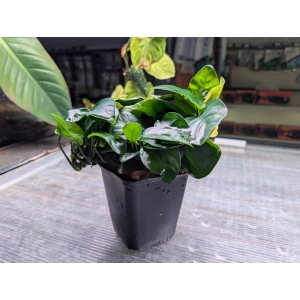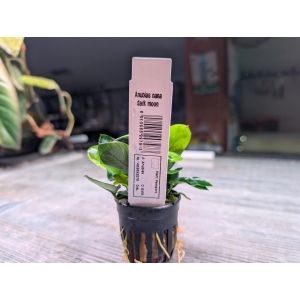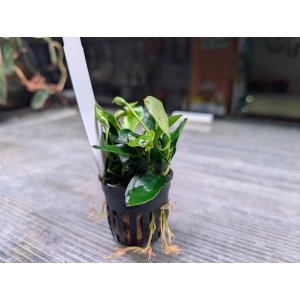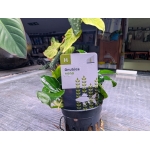

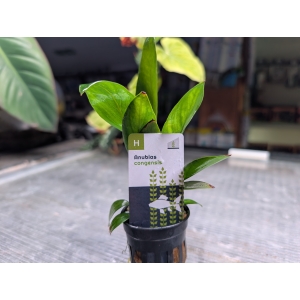

Anubias nana
£7.50
Anubias nana
Bulk Offer – 3 for £18.00
Discount will apply at checkout.
- Description
- Store Policies
- Enquiries
Description
The Dwarf Anubias (Anubias barteri var. nana):
Species Profile:
Anubias barteri var. nana—known universally within the British and international aquascaping communities as Anubias Nana or the Dwarf Anubias—is an iconic, highly celebrated, and structurally magnificent rheophytic plant. Native to the shaded forest streams, riverbanks, and waterfalls of West Africa (predominantly across Cameroon, Nigeria, Gabon, and Equatorial Guinea), this member of the arum family Araceae has spent decades as an foundational staple of the freshwater aquarium hobby.
In a freshwater layout, Anubias Nana behaves as an absolute botanical anchor. It is widely considered by professionals and beginners alike to be completely “indestructible”, possessing phenomenal biological plasticity that allows it to flourish in low-energy nano cubes, high-tech competition layouts, brackish water setups, and African Cichlid displays.
Morphology and Aesthetic Architecture
The physical blueprint of Anubias Nana is perfectly engineered for an attached, slow-growing, epiphytic lifestyle.
- The Rhizome Core: The central structural lifeline of the plant is its thick, fleshy, creeping green modified stem known as the rhizome. Leaves sprout vertically from the upper growth nodes of this rhizome, while a dense network of thick, rubbery white-to-light-green anchor roots extends downwards to clamp onto solid surfaces.
- Foliage Shape and Texture: The leaf blades are broadly ovate to heart-shaped (cordate), featuring a thick, leathery, and incredibly robust cellular structure. The foliage carries a deep, rich forest-green colouration with a glossy, wax-like finish that deflects debris and helps it survive under water.
- Dimensions: It is a true dwarf variety, maintaining a beautifully compact footprint. Individual leaves typically measure 3 to 5 centimetres in length and 2 to 3 centimetres in width, with a mature colony topping out at a maximum vertical height of 5 to 10 centimetres (2 to 4 inches).
- Submerged Spathe Flowering: When well-nourished and fully acclimated to an aquarium, Anubias Nana will regularly surprise the aquarist by pushing up a delicate, pale white-to-cream inflorescence (a structured spathe and spadix, similar to a miniature Peace Lily) directly beneath the water line.
Aquarium Requirements and Water Parameters
Anubias Nana is a true masterclass in environmental tolerance. It easily survives unheated indoor tanks, extreme mineral hardness, and varying pH values, making it an excellent candidate for almost any freshwater biotope.
Optimal Hydrochemical Targets
| Parameter | Target Range |
| Water Temperature | 20°C to 28°C (68°F to 82°F) — Outstanding thermal adaptability |
| pH Range | 6.0 to 7.8 (Highly stable across mild acidic and alkaline water loops) |
| General Hardness (dGH) | 3 to 20 dGH (Handles hard British tap water profiles effortlessly) |
| Carbonate Hardness (dKH) | 1 to 15 dKH |
| Water Circulation | Moderate to High (Good current sweeps away organic waste from the slow leaves) |
| Tank Placement | Highly suited for Foreground transitions and Midground hardscape pockets |
Cultivation, Mounting, and the Rhizome Directive
⚠️ The Epiphytic Rhizome Directive
Under no circumstances must the creeping horizontal green rhizome of Anubias Nana be buried beneath the substrate (such as aqua-soil, sand, or gravel). The rhizome requires completely unhindered access to oxygenated water movement. If buried, anaerobic bacteria will quickly suffocate the tissue, causing the stem to blacken, turn mushy, and rot. This triggers total leaf drop and the ultimate death of the plant.
Advanced Fixing Techniques:
To cultivate Anubias Nana successfully, treat it strictly as an obligate epiphyte and fix it onto your hardscape architecture:
- Cyanoacrylate Gel Bonding: Apply a sparse, pinhead-sized dot of hobby-safe superglue gel directly to the underside of the roots or a bare section of the rhizome. Press the plant firmly onto a piece of bogwood, driftwood, or textured stone (such as volcanic lava rock or dragon stone) for 15 seconds. This can be executed entirely out of the water.
- Thread or Monofilament Tying: Wrap fine, dark cotton sewing thread or clear nylon fishing line carefully around the rhizome and the target hardscape asset. Over a period of 4 to 8 weeks, the roots will naturally etch into the microscopic crevices of the hardscape to form a permanent physical bond, at which point the thread can be cut away.
- Mechanical Wedging: Thanks to its tough, springy root matrix, small portions can simply be gently wedged directly into existing natural cracks, splits, or crevices within your wood or stone layouts, provided the central growing crown is unobstructed.
Lighting Strategy and Algae Mitigation
Anubias Nana is an obligate low-light specialist, making it a phenomenal choice for low-energy layouts.
- The Light Balance: It requires very little light to thrive. Under modest illumination (15–30 PAR), the leaves remain an immaculate deep green, spotless, and entirely easy to manage.
- The High Light Hazard: Exposure to intense, unshaded full-spectrum lighting will not speed up its growth; instead, it will cause the plant severe stress. Because Anubias grows at a glacial pace (often just one new leaf every 2 to 4 weeks), its leaves are highly vulnerable to hosting stubborn Green Spot Algae (GSA) and Black Beard Algae (BBA) if light levels are too high.
- Shading Strategies: If high-powered lighting is required for surrounding carpet plants, always position your Anubias Nana in partial shade—such as beneath the canopy of large driftwood structures or under the shadow of tall stem plants.
Nutrition, Carbon Dioxide (CO2), and Maintenance
- Water Column Nutrition: Because it rests entirely on the hardscape rather than rooted in nutrient-rich soil, Anubias Nana pulls the vast majority of its nourishment directly from the passing water column. Regular dosing of a comprehensive liquid macro and micro fertiliser is highly beneficial. A lack of basic nutrients will manifest as a slow yellowing of the older outer leaf margins.
- Carbon Dioxide (CO2) Supplementation: Pressurized carbon dioxide injection is entirely optional; this plant is a legendary performer in low-tech setups. However, supplying a modest dose of CO2 (5 to 10 mg/L) will completely transform its health, noticeably accelerating its slow growth rate and producing sturdier, cleaner leaf nodes.
- Routine Leaf Grooming: Over time, older leaves near the rear of the rhizome may fade in colour or accumulate spot algae. Use sharp, curved-blade aquascaping scissors to snip the leaf stem (petiole) cleanly and flush with the main rhizome line. This keeps the colony looking pristine and encourages the rhizome to break dormancy, splitting into fresh new growth heads.
Rhizome Fragmentation and Propagation
Propagating Anubias Nana is remarkably straightforward and achieved through simple manual division:
- Using an ultra-sharp, sterile pair of aquascaping micro-scissors or a scalpel, cleanly slice the horizontal creeping rhizome into two or more pieces.
- Ensure each separated cutting retains at least 3 to 4 healthy leaves and a small cluster of developed roots to guarantee rapid, stress-free independent recovery.
- Secure the newly separated plantlets back onto the hardscape. Within a few weeks, the cut nodes will activate, branching out as entirely new independent colonies.
Aquascaping Application and Livestock Compatibility
- The Perfect Transition Tool: In Nature Style and Dutch layouts, Anubias Nana is the ultimate tool for softening harsh lines. Planting a dense group of these compact, glossy green rosettes directly at the boundaries where grey rocks meet dark bogwood perfectly bridges the gap, making the entire hardscape look aged, organic, and mature.
- 100% Herbivore Proof: Due to the presence of tough, leathery cell walls and bitter secondary chemical compounds within its leaf tissue, Anubias Nana tastes highly unpalatable to fish. Destructive substrate-diggers and notorious plant-eating species—such as Goldfish, Silver Dollars, large Barbs, and African Rift Lake Cichlids—will leave the foliage completely untouched.
- Uproot Immune: Because it is glued or tied securely to heavy rocks or roots rather than sitting loosely in the soil, it is fully immune to being uprooted by energetic bottom-dwellers, making it a bulletproof structural asset for setups with active tank mates.
General Enquiries
There are no enquiries yet.