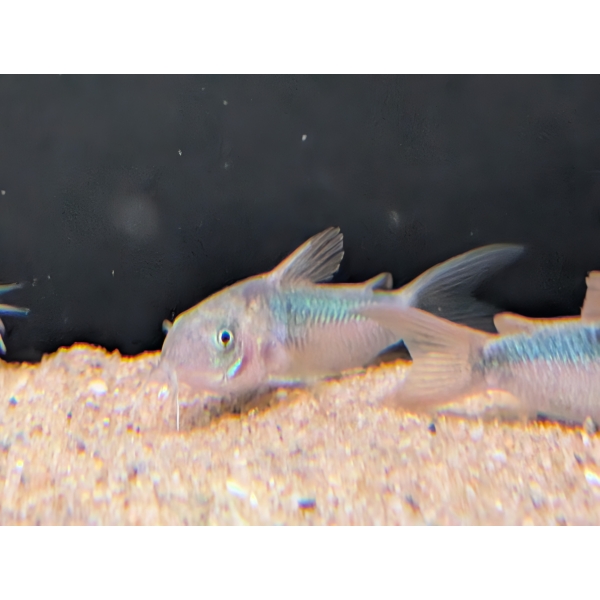
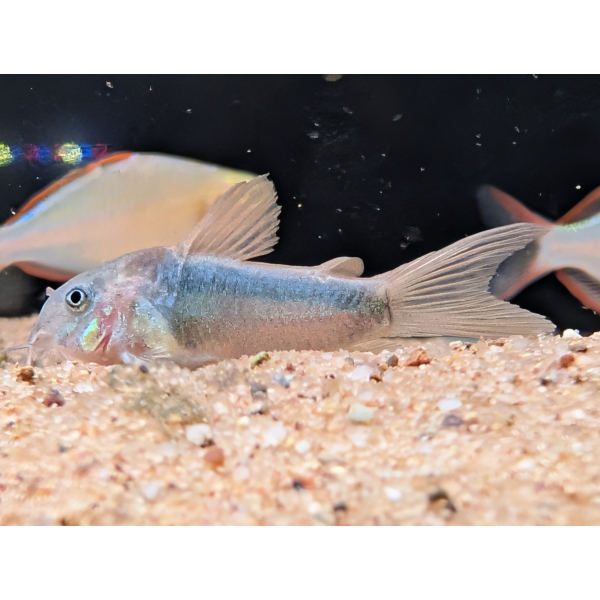
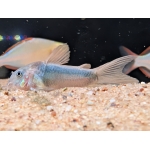

Rust Catfish Osteocaster rabauti
£8.00
Rust Catfish Osteocaster rabauti
Bulk Offer – 3 for £21.00
Discount will apply at checkout.
- Description
- Store Policies
- Enquiries
Description
Osteogaster rabauti (Rust Catfish)
Species Profile:
If you’re looking for a catfish that brings a warm, autumnal palette to your aquarium, the Rust Catfish is an exceptional choice. Formerly known as Corydoras rabauti, this species has recently been reclassified into the genus Osteogaster.
While many of its cousins opt for spots or stripes, the Rust Catfish is celebrated for its deep, “burnt orange” or copper body, contrasted by a bold, dark green-to-black band that runs along its back. It is essentially the “ginger” of the catfish world—and just as full of character.
Vital Statistics
Appearance: The “Rusty” Glow
Unlike the Hoplisoma paleatus (Peppered Catfish) which leans into silver and grey, Osteogaster rabauti is all about warmth.
-
The Body: A rich, solid orange-brown hue that deepens as the fish matures.
-
The Stripe: A thick, dark metallic stripe that begins just behind the head and runs along the top of the flank toward the tail.
-
Juvenile Distinction: Interestingly, young Rust Catfish look almost identical to Hoplisoma zygatus. The best way to tell them apart? The Rust Catfish tends to stay a bit smaller and keeps that deeper, rust-coloured “glow.”
Habitat and Tank Requirements
1. Substrate (The Non-Negotiable)
As with all members of the Corydoradinae family, the Rust Catfish lives its life with its face in the dirt.
-
The Choice: Use fine, smooth sand.
-
The Reason: They have incredibly sensitive barbels. If kept on sharp gravel, these whiskers will erode, leading to “mouth rot” and an inability to find food. A happy Rust Catfish is one that can bury its snout up to its eyes in soft sand.
2. Soft Water Preference
Hailing from the blackwater regions of the Amazon (specifically Peru and Brazil), they prefer slightly softer, more acidic water than the Peppered Catfish. Adding Kattapa leaves or Bogwood to the tank will release beneficial tannins that mimic their natural home and make their orange colours truly pop.
3. Social Structure
The Rust Catfish is a “team player.” They are highly social and will spend their time huddling together in the shade of a plant or “marching” across the sand in a line. You must keep them in a group of at least 6, though 10 or more is ideal for a truly impressive display.
Diet and Nutrition
They are industrious scavengers, but they shouldn’t be treated as the “bin men” of the tank.
-
Sinking Pellets: High-quality protein-rich wafers should be the staple.
-
Frozen Foods: They are “crackers” for Bloodworm, Tubifex, and Black Mosquito Larvae.
-
Feeding Manners: Because they are peaceful and slow feeders, ensure that zippy tank mates (like the Melon Barb) don’t scoff all the food before it reaches the bottom.
Maintenance with your Superfish Scissors
Keep the Floor Clear: Rust Catfish love to rummage around the base of plants. Use your Superfish Plant Scissors to trim back any decaying lower leaves or overgrown carpeting plants like Sagittaria. This ensures there are no “dead zones” where uneaten food can rot, keeping the substrate pristine for those delicate barbels.
Convenient nationwide delivery; you’re only a click away!
Our nationwide delivery service makes it easy to receive your fish directly at your door, anywhere in the UK, for a flat rate of just £30. This convenient service allows you to order up to 10kg of fish, with the assurance that they will arrive in excellent condition. To make the fishes journey as comfortable as possible we use Oxygen in the fish bags and heat packs in all the boxes of fish we send out.
General Enquiries
There are no enquiries yet.