

Regans Dwarf Pike Cichlid (Crenicichla regani)
£30.00
Regans Dwarf Pike Cichlid (Crenicichla regani)
- Description
- Store Policies
- Enquiries
Description
Regan’s Dwarf Pike Cichlid (Crenicichla regani):
Species Profile:
Common Names: Regan’s Dwarf Pike Cichlid, Regan’s Pike Cichlid
Scientific Name: Crenicichla regani
Family: Cichlidae
Origin: Brazil (Widespread across the Amazon River basin, notably the Rio Negro and Rio Tapajós)
1. Overview and Natural Habitat
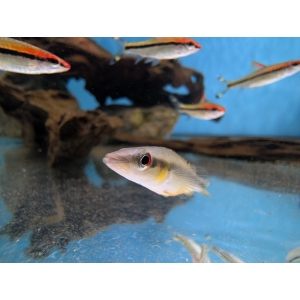
Crenicichla regani is a highly captivating, predatory dwarf cichlid. While the phrase “pike cichlid” often conjures images of massive, aggressive monsters, C. regani is a true dwarf. In the wild, they inhabit the shallow margins of slow-flowing rivers, flooded forests, and leaf-litter beds. They are typically found in blackwater environments, though they also occur in clearwater systems. They use their elongated bodies and cryptic coloration to stalk small prey among submerged roots and fallen branches.
2. Appearance and Size
This species features the classic torpedo-shaped, hydrodynamic body characteristic of the genus Crenicichla, but in miniature form.
- Size: Males are notably larger, typically reaching a maximum length of 13–15 cm (5–6 inches). Females remain more compact, rarely exceeding 8–10 cm (3–4 inches).
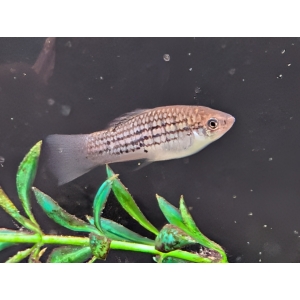
- Sexual Dimorphism: Unlike many cichlids, the females are often considered the more colourful sex. Mature females develop a brilliant, broad orange-to-red belly and a distinct black ocellus (eye-spot) ringed in white or yellow on their dorsal fin. Males are more subtly coloured, displaying fine horizontal striping, speckled patterns on their fins, and more pointed dorsal and anal fins.
3. Aquarium Requirements
Tank Size
Due to their active hunting nature and territorial behaviour, horizontal footprint is far more important than tank height. A single pair requires an aquarium of at least 115 litres (approx. 90 cm in length). If keeping them in a community setup or with other bottom-dwellers, a 180–240 litre tank is highly recommended.
Décor and Substrate
To minimise aggression and replicate their natural stalking grounds, the tank must be intricately arranged:
- Substrate: A soft, deep sand substrate is mandatory. C. regani loves to dig, wallow, and occasionally burrow into the substrate when startled. Sharp gravel can damage their delicate bellies and mouthparts.
- Visual Barriers: Use extensive networks of bogwood, driftwood branches, and smooth rocks to break lines of sight.
- Caves and PVC Tubes: Provide plenty of narrow caves, clay pipes, or PVC tubes. They prefer tight spaces where they can back in and monitor their surroundings.
- Leaf Litter: A thick layer of dried beech or Indian Almond leaves provides cover and encourages natural foraging.
4. Water Parameters
While wild-caught specimens can be highly sensitive to water quality, C. regani is relatively hardy once properly acclimated. They thrive best in soft, acidic to neutral conditions.
| Parameter | Recommended Range | Notes |
|---|---|---|
| Temperature | 24°C – 29°C | Prefer warmer, stable tropical temperatures. |
| pH | 5.5 – 6.8 | Keep strictly on the acidic side for wild-caught individuals. |
| Hardness | 2 – 10 dGH | Soft, low-mineral water is highly beneficial. |
Maintenance: They are highly sensitive to dissolved organic waste and high nitrate levels. Excellent filtration combined with weekly 30% water changes is essential to prevent health complications like Hole-in-the-Head disease.
5. Diet and Feeding
Crenicichla regani is an ambush predator with a carnivorous diet. Newly imported individuals can be notoriously stubborn and may initially reject anything but live food.
- Live Foods: Intitially, they may require live ghost shrimp, river shrimp, guppies, or earthworms to stimulate their feeding response.
- Frozen Foods: Once settled, they can be transitioned to frozen items. Feed vitamin-enriched brine shrimp, Mysis shrimp, krill, and bloodworms.
- Prepared Foods: Getting them to accept dried pellets or flakes takes patience. Sinking carnivore pellets can be introduced gradually by mixing them with live or frozen foods.
6. Behaviour and Compatibility
Despite their predatory nature, their small size means they are generally peaceful toward fish they cannot swallow. However, they are highly territorial toward their own kind and other substrate-dwellers.
- Intraspecific Aggression: Males can be brutal toward females if the female is not ready to spawn. They should be kept either as a single verified bonded pair or as a single individual. Avoid keeping multiple males in the same tank unless the aquarium is exceptionally large.
- Tank Mates: Choose fast-moving, deep-bodied fish that occupy the upper water column. Excellent options include:
- Medium-sized tetras (e.g., Bleeding Heart, Emperor, or Congo Tetras)
- Hatchetfish (surface dwellers)
- Medium-sized Corydoras or Loricariid catfish (provided there are enough caves to share)
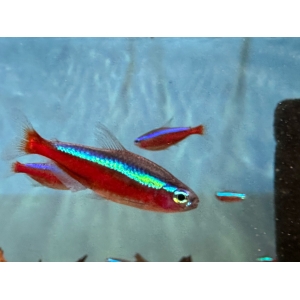
- Avoid: Small, streamlined fish (like Neon Tetras or Endlers) and ornamental shrimp, as they will be hunted and eaten.
7. Breeding
Breeding C. regani is a rewarding challenge for advanced aquarists. They are secretive cave spawners.
- Pair Bonding: The easiest way to get a pair is to raise a group of juveniles together and let them form natural bonds, though you must monitor them closely and remove sub-dominant fish as they mature.
- Spawning Site: The female will select a tight, secluded cave or tube, often choosing an entrance barely wide enough for her to squeeze into. She will lay between 50 to 150 eggs on the roof of the cave.
- Parental Care: The female stays inside the cave to tend to the eggs, while the male fiercely patrols the perimeter. The eggs hatch in about 3–4 days.
- Fry Raising: Once the fry become free-swimming (around day 7), they can be fed newly hatched brine shrimp (Artemia nauplii) and microworms. The parents will continue to guard the fry for several weeks.
Convenient nationwide delivery; you’re only a click away!
Our nationwide delivery service makes it easy to receive your fish directly at your door, anywhere in the UK, for a flat rate of just £30. This convenient service allows you to order up to 10kg of fish, with the assurance that they will arrive in excellent condition. To make the fishes journey as comfortable as possible we use Oxygen in the fish bags and heat packs in all the boxes of fish we send out.
For your peace of mind we enclose a slip which will explain what to do in the event of a fish not traveling too well.
We use a licensed courier to deliver your fish directly to you door and will be with you by 1pm the next day.
Our delivery days are as follows:
Tuesday for Wednesday delivery
Wednesday for Thursday delivery
Thursday for Friday delivery
Please put your desired delivery day in the Order Notes on the Checkout page.
General Enquiries
There are no enquiries yet.